Matthew Crippen

Matthew Crippen

Professor of Philosophy — Pusan National University & Berlin School of Mind and Brain

Professor Matthew Crippen

Awarded for excellence, Matthew Crippen has held academic posts on four different continents. His research focuses on Western and Non-Western history of philosophy, cognitive science, and value theory informed by one another and orbiting ecological concerns, including embodiment. He has over 60 publications, many in top-ranking journals such as Synthese, Phenomenology and the Cognitive Sciences, Philosophical Psychology, Topoi, the British Journal of Aesthetics, Frontiers in Psychology, Environmental Ethics and Transactions of the Charles S. Peirce Society, plus a Columbia University Press monograph, titled Mind Ecologies: Body, Brain, and World. Outside the academy, he has worked as a musician, mandolin and guitar instructor, and gymnastics coach.

Publications
Books

Coming soon.

Referred Articles

Cover image
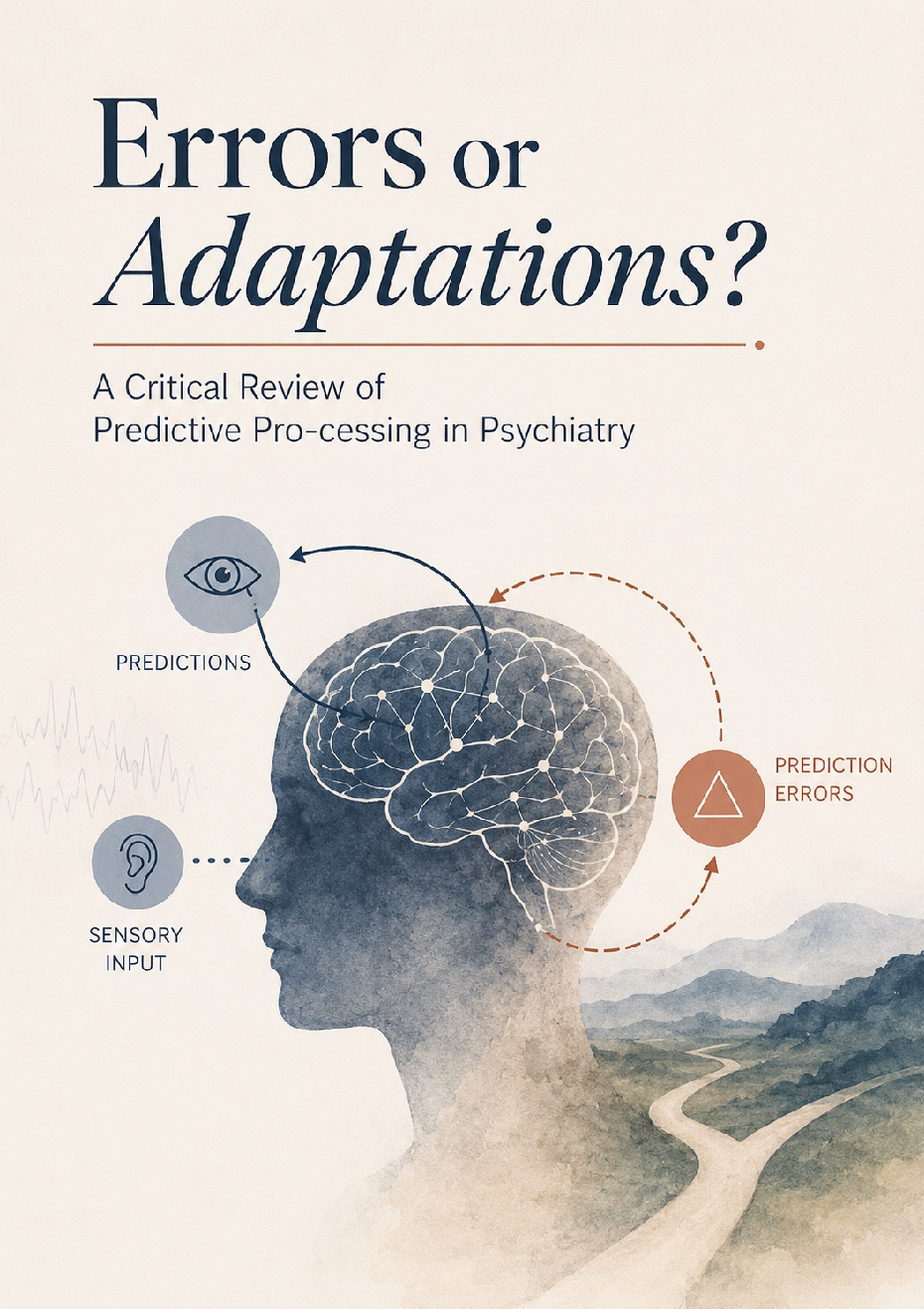
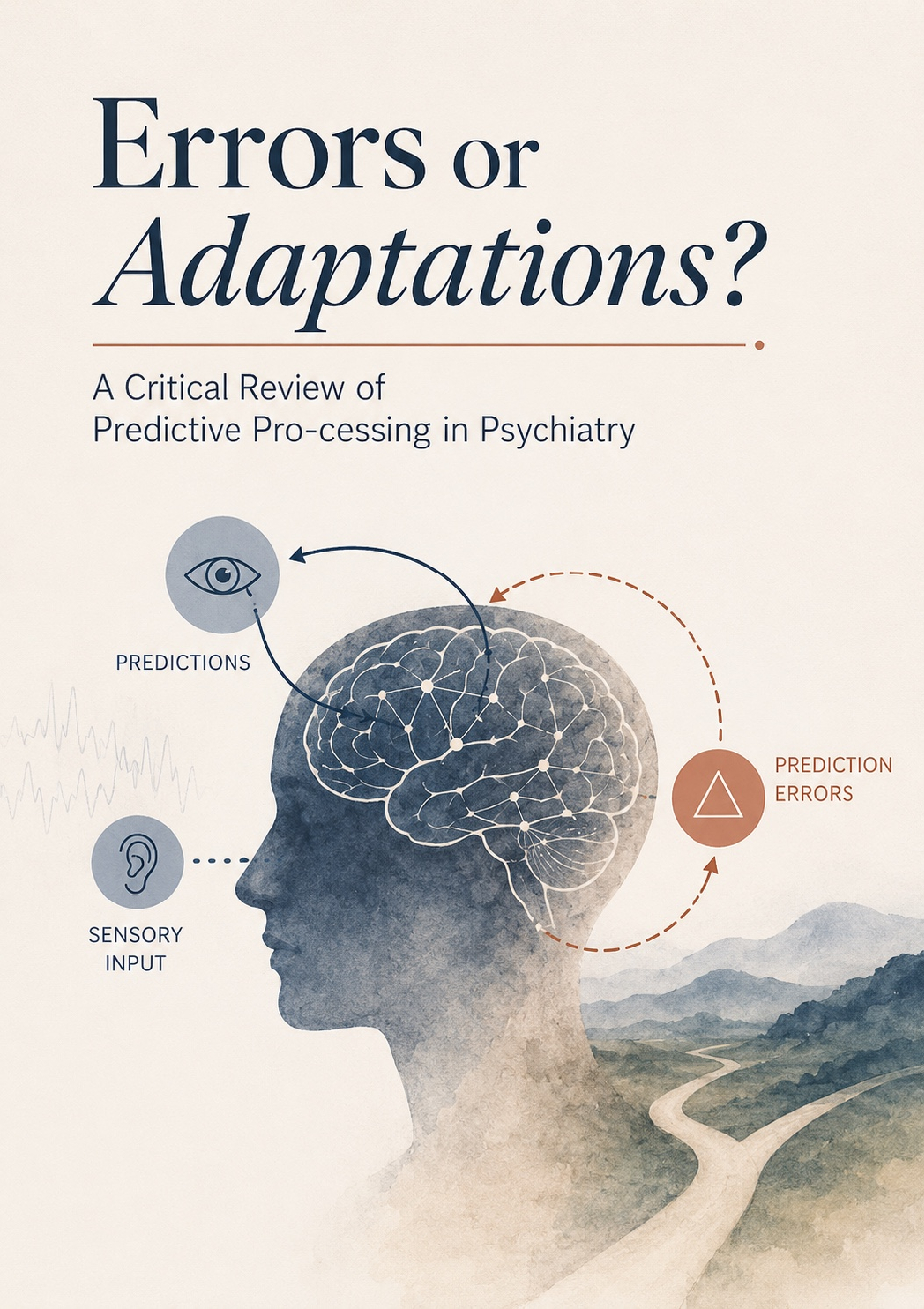
Errors or Adaptations? A Critical Review of Predictive Processing in Psychiatry, Behavioral Sciences, 2026, 16, 1116 (Behavioral Sciences)
Abstract: Predictive processing (PP) accounts often characterize mental illness as maladaptive and epistemically distorting due to mismatches between brain-generated top-down models and bo1om-up sensory inputs, with this review identifying exceptions. First, hypervigilance in trauma survivors with PTSD or depression may sustain desirable gaps between anticipated problems and actual harms that would otherwise occur. Second, PP defenders have argued that depressive slowdowns follow from maladaptive brain-based regulatory models, yet physiological problems may make activity strenuous-in which case slowing down is adaptive. Third, PP researchers introduce tacit normative assumptions. For example, in autism and ADHD, they stipulate thresholds for how specific (hence error-prone) predictive models should be, and PP interpretations of schizophrenia sometimes presuppose Western concepts of self as normative neurocognitive ideals. Fourth, PP accounts of prediction error can tacitly invoke veridical representation, even though advocates regularly claim that cognition evolved primarily for action, not truth-seeking. While criticizing PP for its overreaches, this review also explores how greater a1ention to these exceptions and factors such as cultural variability may strengthen the framework’s capacity to understand and contribute to the treatment of a range of psychiatric conditions.
Download PDF
Cover image
Enactivism: Progressive, Pluralist—or Just Halfway Empiricism? (Adaptive Behavior)
Abstract: Despite historical shifts, “science” has consistently meant epistemic authority, perhaps leading enactivists to cast their work accordingly. Yet enactivism sits uneasily with Popperian falsifiability, Kuhnian paradigm shifts, Hempel’s standards and other philosophy of science benchmarks, but does better under Lakatos. Lakatos’s model holds that progressive science preserves a hardcore of principles by fiat, aligning with enactivism’s reliance on non-negotiable grounding tenets. However, Lakatos also requires testing that generates anomalies and yields novel predictions, exemplified by the postulation and discovery of a new planet to protect Newtonian mechanics. Enactivism struggles on this second step, sometimes ignoring anomalies, as with representational additions to Brooks’s robotics, or else engaging in what William James calls halfway empiricism-which definitionally preempts alternatives to maintain positions despite, rather than because of, evidence. James anticipates Feyerabend’s pluralism and his claim that scientific ideals-unified method, neutral observation, cumulative progress and empirical fit-rarely match practices. From this angle, enactivism might count as a science, albeit only with diluted epistemic authority. James and Feyerabend offer an additional lesson: logical consistency matters in simple cases like rejecting “square circles,” but it is not obvious that the complexities of mind are explicable by a single, internally consistent theory.
Download PDF
Cover image
Selective Permeability in Global Cultures: Normative Shadings of Self-Illness Ambiguity and Psychiatry. (Phenomenology and the Cognitive Sciences)
Abstract: This article exposes some culturally contingent foundations of self-illness ambiguity, wherein psychiatric patients struggle to distinguish their authentic selves from their diagnosed conditions and to determine which is in control. In cultures where the self is experienced as fairly fluid and situational, with its causal force downplayed, “losing control” or “not knowing who one is” may carry less significance. Clinicians, however, may accentuate self-illness ambiguity by uncritically subsuming Western ideals of selfhood, such as aspirations toward independent individualism-perhaps contributing to the pathologization of culturally unfamiliar temperaments. Cultural environments, in turn, may range from supportive to hostile depending on how specific self-construals are valued within them, selectively exacerbating distress, though psychiatric frameworks may misinterpret such outcomes as internal disorders. The article finishes by urging a reevaluation of mental illness models to better account for cultural variability in self-understandings.
Download PDF
Cover image
Errors or Adaptations? A Critical Review of Predictive Processing in Psychiatry. (Preprint)
Abstract: Predictive processing (PP) accounts often characterize mental illness as maladaptive and epistemically distorting due to mismatches between brain-generated top-down models and bottom-up sensory inputs, with this review identifying exceptions. First, hypervigilance in trauma survivors with PTSD or depression may sustain desirable gaps between anticipated problems and actual harms that would otherwise occur. Second, PP defenders have argued that depressive slowdowns follow from maladaptive brain-based regulatory models, yet physiological problems may make activity strenuous-in which case slowing down is adaptive. Third, PP researchers introduce tacit normative assumptions. For example, in autism and ADHD, they stipulate thresholds for how specific (hence error-prone) predictive models should be, and PP interpretations of schizophrenia sometimes presuppose Western concepts of self as normative neurocognitive ideals. Fourth, PP accounts of prediction error can tacitly invoke veridical representation, even though advocates regularly claim that cognition evolved primarily for action, not truth-seeking. While criticizing PP for its overreaches, this review also explores how greater attention to these exceptions and factors such as cultural variability may strengthen the framework’s capacity to understand and contribute to the treatment of a range of psychiatric conditions.
Download PDF
Cover image
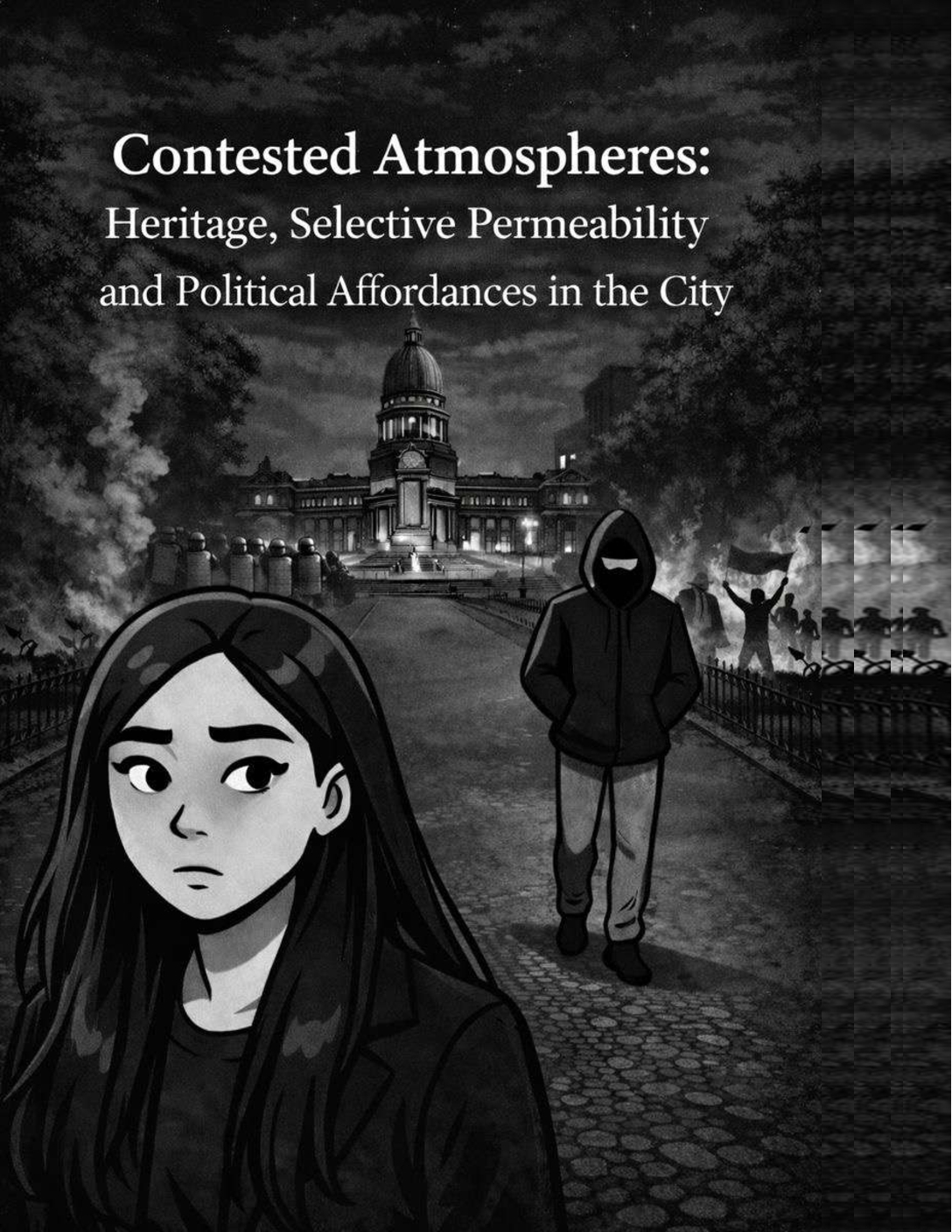
Contested Atmospheres: Heritage, Selective Permeability and Political Affordances in the City. (Urban Science)
Abstract: This article examines how the same heritage or revival site can produce both welcoming and hostile atmospheres depending on the cohort, yielding selectively permeable environments that enable some groups while constraining others. Climatic volatility further shapes these encounters, as extreme weather has been shown to increase negative valence by making movement and access more difficult, especially for marginalized populations. Drawing on built-form analysis and political history-supplemented with interview data on everyday navigation and affective experiences in cities-the paper examines three cases: Cairo’s Tahrir Square, revivalist university campuses and Buenos Aires women’s marches. To explain why these locales produce varying atmospheres for different groups, the article draws on affordance theory-an empirically grounded account of valenced action possibilities that exist independently of any one observer yet remain harder for vulnerable populations to negotiate. These challenges often intensify around heritage and revival aesthetics, which can alienate outsiders, and are amplified by Crime Prevention Through Environmental Design (CPTED) elements, such as elevation changes, ornamental walls and other territorial cues. The study contributes to urban political ecology, especially scholarship on how aestheticized urban forms serve as instruments through which powerbrokers materialize dominance and produce uneven access to public venues.
Download PDF
Cover image
Enactivism: A Newish Name for Mostly Old Ideas? (Phenomenology and the Cognitive Sciences)
Abstract: This article argues that Dewey expresses what seems to be a core enactive commitment to constructivism: that creatures do not encounter pre-existing realities but bring them out by altering their surroundings. He adds that constructivism does not obviate realism because changes, once introduced, really are there in relation to a creature’s capacities. This poses a dilemma. If enaction primarily entails altering the external milieu, then the movement repeats pragmatism, also collapsing a basis upon which many of its authors differentiate their outlooks from ecological psychology’s realism. Yet if constructive activity is largely interior, as enactivists’ language sometimes suggests, then critics may be right in saying that the movement backslides into early Modern solipsism. A broader argument is that enactivists sometimes perpetuate what James characterizes as monistic halfway empiricism. Here, the risk is that researchers hold positions not because of evidence but regardless of it, or stipulate terminological definitions that exclude opposing views ahead of time. Even physics remains ununified, and there may be room for combining antagonistic accounts of mind. Or maybe normally hostile positions like enactivism and functionalism are, with some terminological reframing, reconcilable. The article also touches on historical points, such as the fact that American philosophy and enactivism have Asian and evolutionary influences, or that they react against common schools. The purpose is to clarify the movements in question and identify where enactivists engage in something like halfway empiricism by orienting themselves against enemies based more in fiction than fact.
Download PDF
Cover image
Selective Permeability and Situated Cognitive Harm in Multicultural Classrooms. (Topoi)
Abstract: This article examines multicultural classrooms through the selective permeability model, which posits that individuals encounter different action possibilities or affordances in the same setting. The goal is to illuminate how educational environments may support some students while disadvantaging others, thereby causing situated cognitive harm. The article proceeds in several parts. First, it explores selective permeability in relation to what Gibson describes as “positive” and “negative” affordances, articulating how these polarities can change depending on a person’s cultural background. Second, it integrates insights from cultural psychology, such as the influence of regional geography and city design on behavior-constraining cultural norms. These norms can productively funnel actions and learning. Yet when a student’s cultural norms clash with tacit classroom prescriptions, the situation can be analogous to arriving at a rink with rollerblades only to be placed on ice: the learner confronts action limiting negative affordances and undergoes situated cognitive harm. Third, the article presents qualitative and quantitative data that clarify how culture moderates what students find helpful or hindering. Notably, incongruent norms are not always detrimental; under certain circumstances, they can serve as a catalyst for growth.
Download PDF
Cover image
William James and the Pragmatics of Faith: Bridging Science, Religion and Global Indigenous Epistemologies. (Religions)
Abstract: This article examines William James’s philosophy of science through his pragmatic response to epistemic fallibilism, emphasizing how actionability-rather than evidential certainty-underwrites both scientific and religious practices. While James explicitly drew comparisons between science and Abrahamic scriptures, my account highlights resonances with non-Western traditions, particularly Indigenous American and Asian epistemologies, also situating some of James’s philosophical motivations within his biography. James may have indirectly absorbed Asian religious and philosophical teachings from American Transcendentalists, who engaged with them, and he may have encountered Amerindian perspectives through the cultural milieu of the United States or during his Amazonian expedition. In either case, threads within these global Indigenous traditions align with the weight James’s work gives to contextual, agent-relative forms of knowing that are inseparable from action. I conclude by discussing how James’s ideas support an account of animism that integrates Amerindian thought with the extended mind thesis. I also detail how his pluralistic account of experience and reality creates conceptual space for the coexistence of science and spirituality-ironically, by undermining the assumption that the two operate according to radically distinct epistemologies. Throughout the article, I connect James’s thought to more recent debates in religion and metaphysics.
Download PDF
Cover image
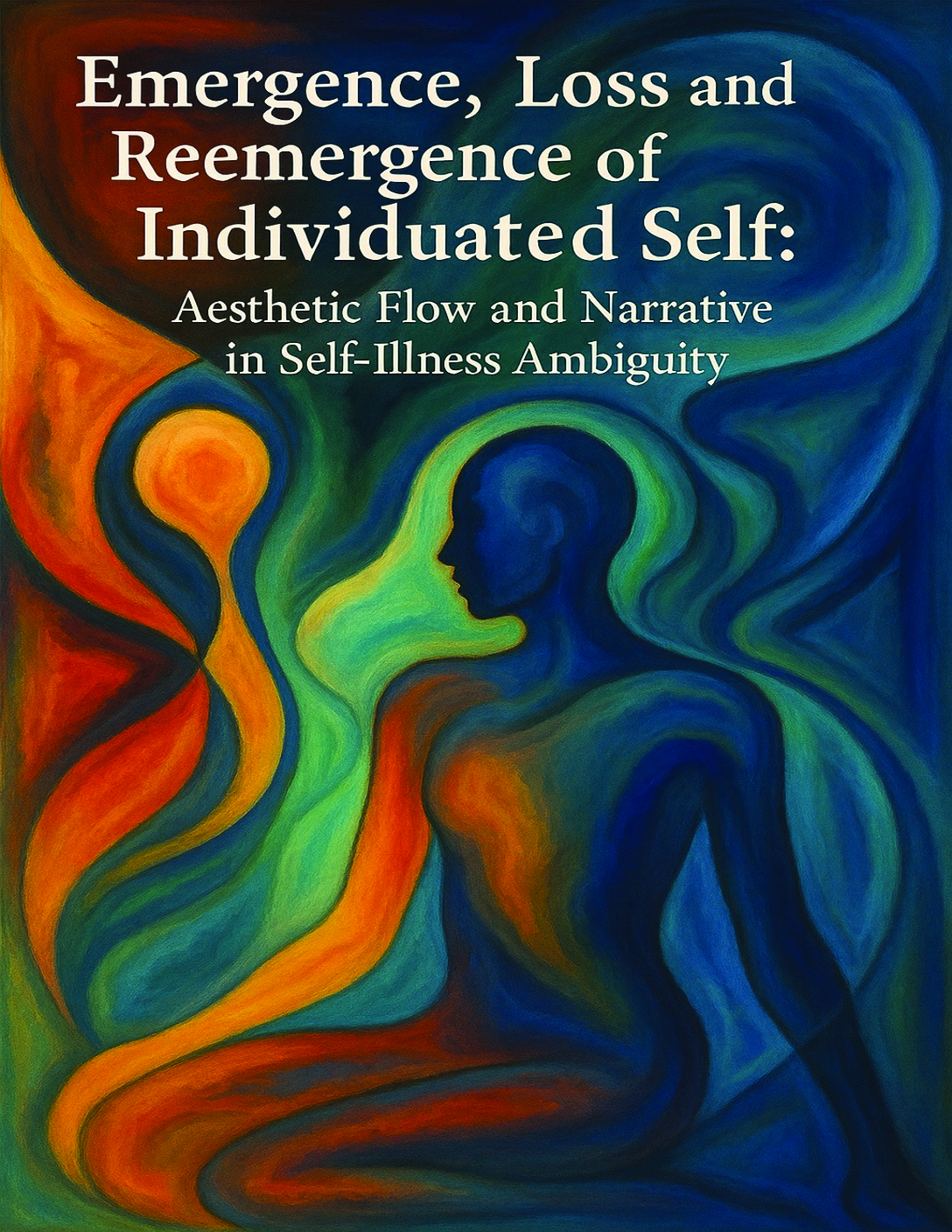
The Emergence, Loss, and Reemergence of the Individuated Self: Aesthetic Flow and Narrative in Self-Illness Ambiguity. (Philosophical Explorations)
Abstract: Known as self-illness ambiguity, subjective confusion about whether patients or their mental illnesses are in control may partly stem from clinical methods mimicking medical models that diagnose illnesses (e.g., viruses) as present or not irrespective of sufferers’ life stories. Researchers accordingly propose narrative contextualization as a way of disambiguating self from illness. But what if heightened self-attention is symptomatic of mental illness, as evidence suggests? Wellbeing may then associate with a smaller divide between “me” and “not-me,” a position Csikszentmihalyi’s flow psychology and Dewey’s aesthetics both support. What I call aesthetic flow involves embodied, non-linguistic dramatic structure, suggesting another way to view narrativity. By lessening self-preoccupation-and perhaps illness severity-this kind of narrativity may help dissolve self-illness ambiguity. However, a perplexity remains. Aesthetic flow depends on encountering resistance, including psychological obstacles. In life, as in art, this resistance delineates and individuates. Thus, aesthetic flow might lead to a temporary loss of self, followed by its reemergence in more immersive and relational forms. A second complexity is that experiences of “self” vary across time, cultures, and individuals-much like concepts of “justice” or “love.” This fluidity makes broad generalizations about selfhood and illness problematic. My solution partly sidesteps this by downplaying the importance of self.
Download PDF
Cover image
Should I Stay or Should I Go? An Analysis of the Selective Permeability of Busan (Kritike)
Co-authors: Maria Almendra Sotelo and Dana Jang
Abstract: Our task in this article is to investigate selective permeability in the city of Busan in South Korea. Drawing on Gibson’s tenet that perception organizes around “affordances” or action possibilities, the selective permeability model suggests that a single setting can be objectively supportive or hostile to different individuals. Embodied pragmatists and phenomenologists influenced Gibson, and we explore how factors like cultural habits, language, gender, age, geographical topography, and built form in Busan combine to alter bodily comportment so that action-closing “negative affordances” can manifest to one individual but not another. This, in turn, may make one stay in or retreat from Busan or places in it. For example, there is evidence that middle-aged Russian-speaking men experience greater safety-and thus freedom of movement-in some areas of Busan, as compared to younger Russian-speaking men, not to mention women. Throughout, we follow Dewey’s lead in adopting what might be called “constructive realism,” which holds that changes, once introduced to the world by human actors, are concretely there independently of any single observer-a position that weighs against dismissing
Download PDF
Cover image
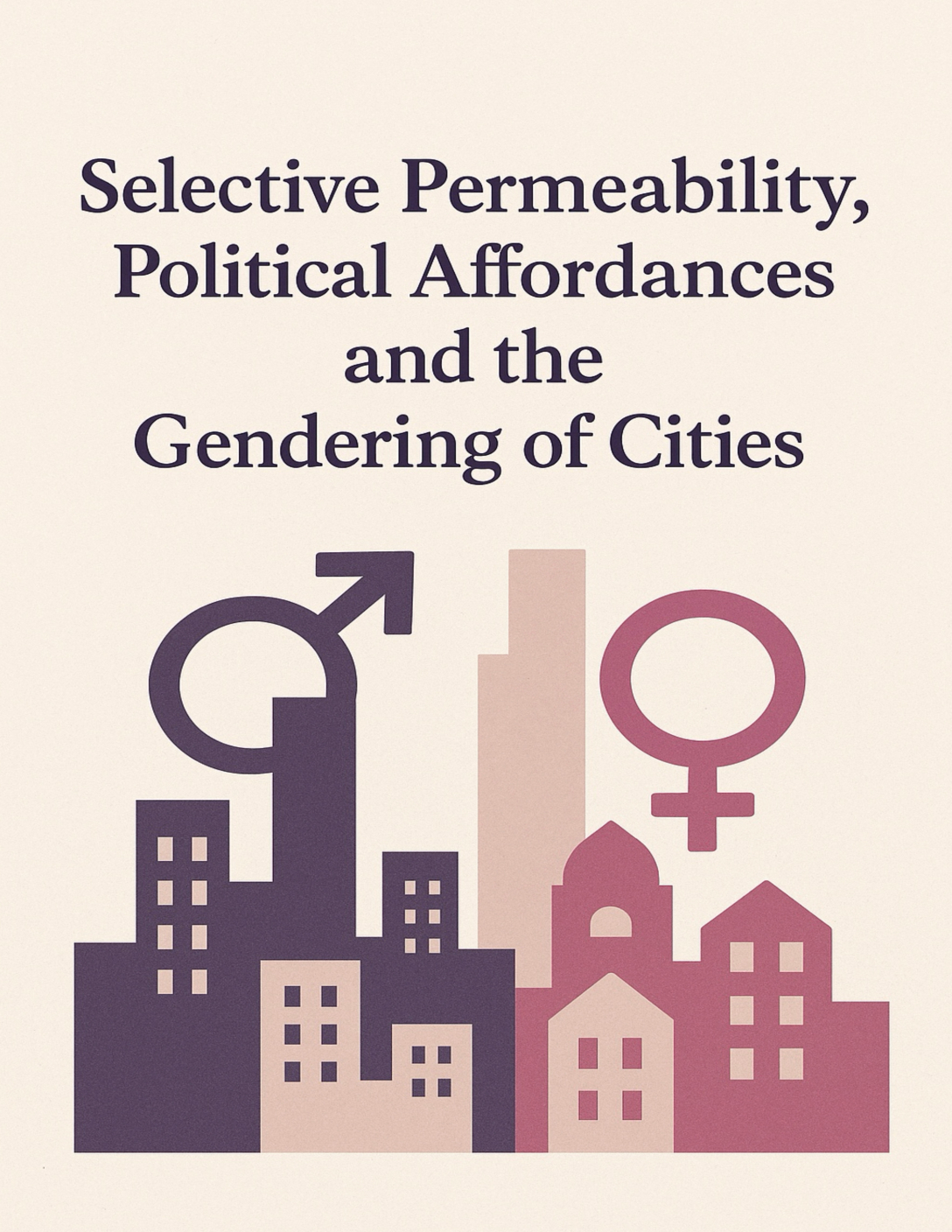
Selective Permeability, Political Affordances and the Gendering of Cities. (Societies)
Abstract: Women disproportionately encounter negative affordances in urban environmentsdefined as features that severely restrict movement and impose harm. City venues are, thus, selectively permeable to women, though men face their own challenges, especially in intersectional contexts. The data in this study suggest that gender combines with ethnicity, socioeconomic status, and visible religious markers, making obstruction a shifting but nonetheless real phenomenon, much like a staircase genuinely impedes wheelchair access. Cultural context also matters: a Black woman may face one set of barriers in Paris, another in Seoul, with a Latin American woman encountering different ones in both. Building on these observations, the article argues that urban landscapes manifest gender-based political affordances-material configurations that reflect and reinforce social inequalities. As an affordance-based framework, the selective permeability model (1) draws on a wellsupported theory of perception, where settings objectively present both favorable and hostile values relative to agents. The outlook (2) thereby challenges the stereotype that women’s spatial concerns are merely subjective. The position also (3) affirms that despite differences, people share bodily constraints and, hence, have largely overlapping values and experiences. The perspective accordingly avoids exaggerating divisions to the point of denying the mutual understanding that underlies empathetic norms.
Download PDF
Cover image
Selective Permeability, Political Affordance and the Atmospheric Qualities of Tahrir Square. (Routledge)
Co-authors: Maria Almendra Sotelo
Abstract: Built in the 19th century as part of Cairo’s Parisian-inspired downtown and renamed from Ismailia to Tahrir Square after the 1952 Egyptian Revolution, this public space became a protest hub during and after the 2011 Arab Spring, alarming Egypt’s powerbrokers. In response, Tahrir-meaning “liberation”-was outfitted in 2015 with features promoted by the Crime Prevention through Environmental Design (CPTED) model, including decorative elements that make outsiders emotionally uncomfortable. This chapter argues that CPTED adjustments created an atmosphere more threatening to Egyptians than tourists, who faced less harassment, rendering the space selectively permeable. A second claim is that this selectively hostile atmosphere was not merely a psychological projection. This aligns with Gibson’s concept of “affordances” (action possibilities) as non-subjective “values.” Just as a river is safely swimmable or not depending on a person’s skills, Tahrir had different risk-values and hence use-values for Egyptians versus tourists. One might say the space was structured by “political affordances”-normative openings and closures that implicitly segregate. Though sometimes at odds with affordance theory, enactive cognitive science helps explain how behavioral dispositions-like hesitancy-selectively enacted threatening atmospheres in Tahrir Square by making individuals more conspicuous to surveilling police.
Download PDF
Cover image
Affective Rationalism and Pragmatic Philosophies of Science. (Routledge)
Abstract: This chapter situates William James’s philosophy within the history of science, emphasizing that his “radical empiricism” did not entail a wholesale rejection of rationalism. James was sharply critical of British empiricism—particularly Herbert Spencer’s neo-Lamarckian claim that the environment imprints itself on a passive mind across both ontogenetic and phylogenetic scales. In repudiating this view, James embraced aspects of post-Kantian rationalism and drew on the Darwinian notion of indirect adaptation to argue that the mind deploys filtering mechanisms—arising independently of sensory content—to select or neglect aspects of environmental experience. Whereas rationalists after Kant often treated logic or conceptual categories as the primary structuring forces of experience, James advanced a value-laden epistemology: he maintained that interests and emotions shape perception and belief, thus defending what might—oxymoronically—be called an affective rationalism. Certain metaphysical assumptions that scientists continue to adopt, knowingly or not, and which James defended as part of his pragmatic criteria, are likewise value laden. Though the focus is on James, this chapter also examines extensions of his ideas that show up in John Dewey’s constructivist account of how appearances and realities—here equivalent to one another—are concretely (really) generated in the world through human activity.
Download PDF
Cover image
Selective Permeability, Social Media and Epistemic Fragmentation. (Topoi)
Abstract: This article examines epistemic impacts of social media, merging Gibson’s affordance theory with the notion of selective permeability, which holds people encounter objective differences in a setting because of their distinct capacities, only here applying the idea to online spaces. I start by circumscribing my deployment of “affordances,” taking care not to totally divorce the term from Gibson’s intent, as often happens in information technologies research. I next detail ways that selective permeability characterizes online epistemic landscapes, focusing on how factors (like culture) moderate normative standards for sharing information. This leads to a discussion about selective receptivity and blindness to information in the context of social media—a situation that amplifies political divides and renders antagonists mutually incomprehensible. This segues into my final topic: an exposition of how social media can make the offline world more selectively hostile to some. An additional proposition is that practical habits cultivated on networking apps can modulate what affordances are present in offline arenas, as opposed to just affecting which ones get noticed. Throughout, I suggest that selective permeability answers an increasingly recognized challenge: the difficulty of generalizing conclusions about one app to others and across cultures, ages, etc. Ultimately, my aim is not only to explicate how social media fragments common social knowledge but to defend selective permeability as an epistemic template for comprehending social media.
Download PDF
Cover image
Selective Permeability and Multicultural Visuality (Hungarian Academy of Sciences)
Co-authors: Eunbin Lee (second author)
Download PDF
Cover image
Deepfakes, AI and Media Literacy. (Hungarian Academy of Sciences)
Download PDF
Cover image
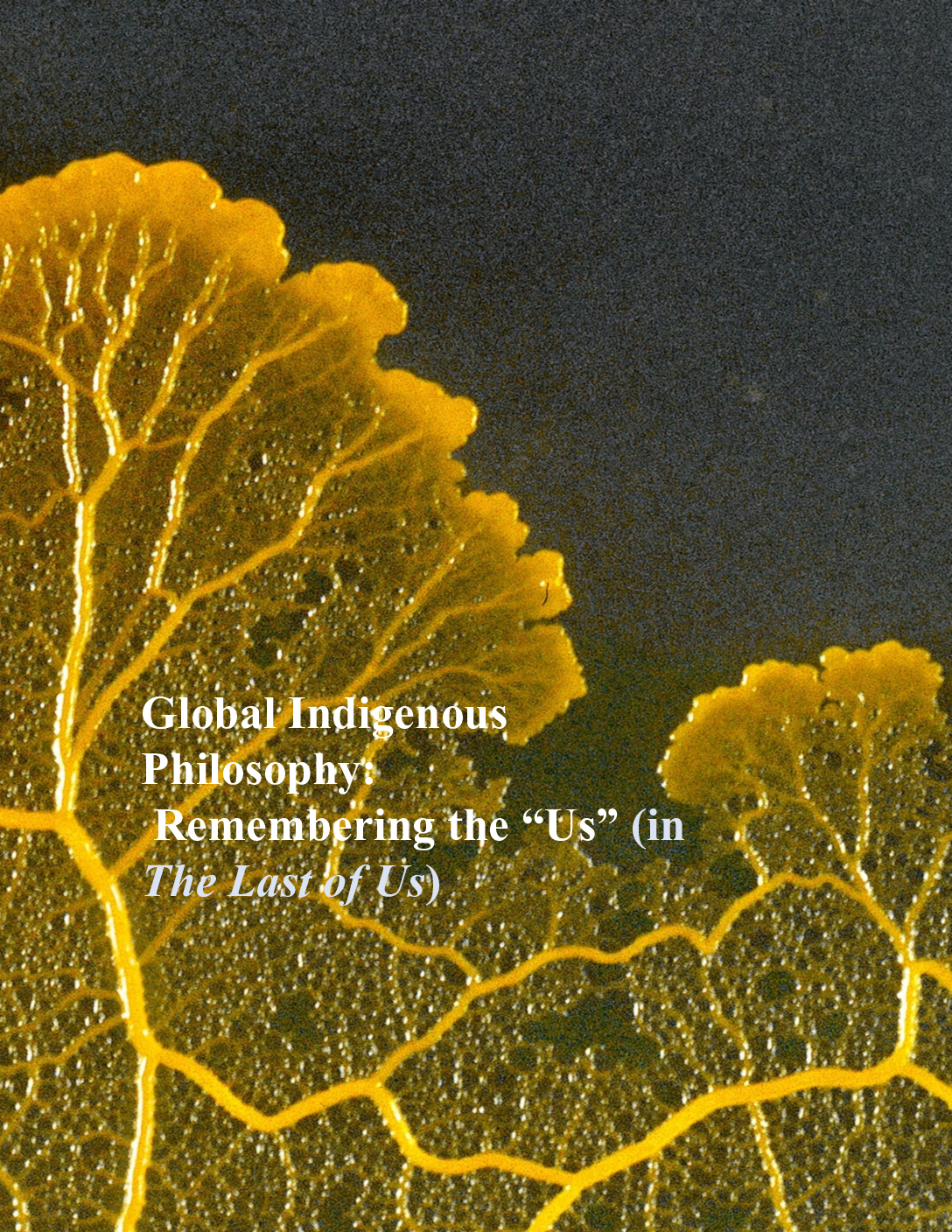
Global Indigenous Philosophy: Remembering the “Us” (Not mentioned)
Abstract: HBO’s The Last of Us begins with Dr. Neuman speculating that some zombie-ant fungus could evolve and spread to humans. The fungus makes ants climb trees where they sprout spores that rain onto new victims. If transmitted to people, Dr. Neuman frets the result would be “billions of puppets with poisoned minds permanently fixed on one unifying goal: to spread the infection…” Now, we have fungal yeast and bacteria in us that affects our brains, and there’s a pathogen that leads rodents (and humans) to behave riskily, making them easier prey for felines, inside of which the parasite reproduces. 1 But The Last of Us isn’t solely about fungus-driven zombification. It also explores the contagion of ideas. Whether it’s the fanaticism of FEDRA, the Fireflies, or David’s cult, people become mindlessly obedient to the agendas of larger groups. Does The Last of Us infect the viewer and gamer with a populist American ideology that elevates individuals over communities? With the complicated exception of the Jackson Community, the other collectives are mind-numbingly authoritarian. Despite occasional moralizing about Joel’s or Henry’s past misdeeds, we root for their survival, even if it means killing members of collectives. And let’s not forget the main antagonist is the fungus, which dehumanizes the Infected by pulling them into a violent hive mind. Collective existence isn’t inherently dehumanizing though. Communities form the basis for importantly human traits like language, cooking, political reasoning, advanced tools, and religion. 2 In fact, Indigenous traditions from around the globe suggest that the individual “I” originates in the collective “us,” and these perspectives shaped founding American philosophies. 3 Because The Last of Us celebrates popular American values, which are rooted not just in traditions stressing individual
Download PDF
Cover image
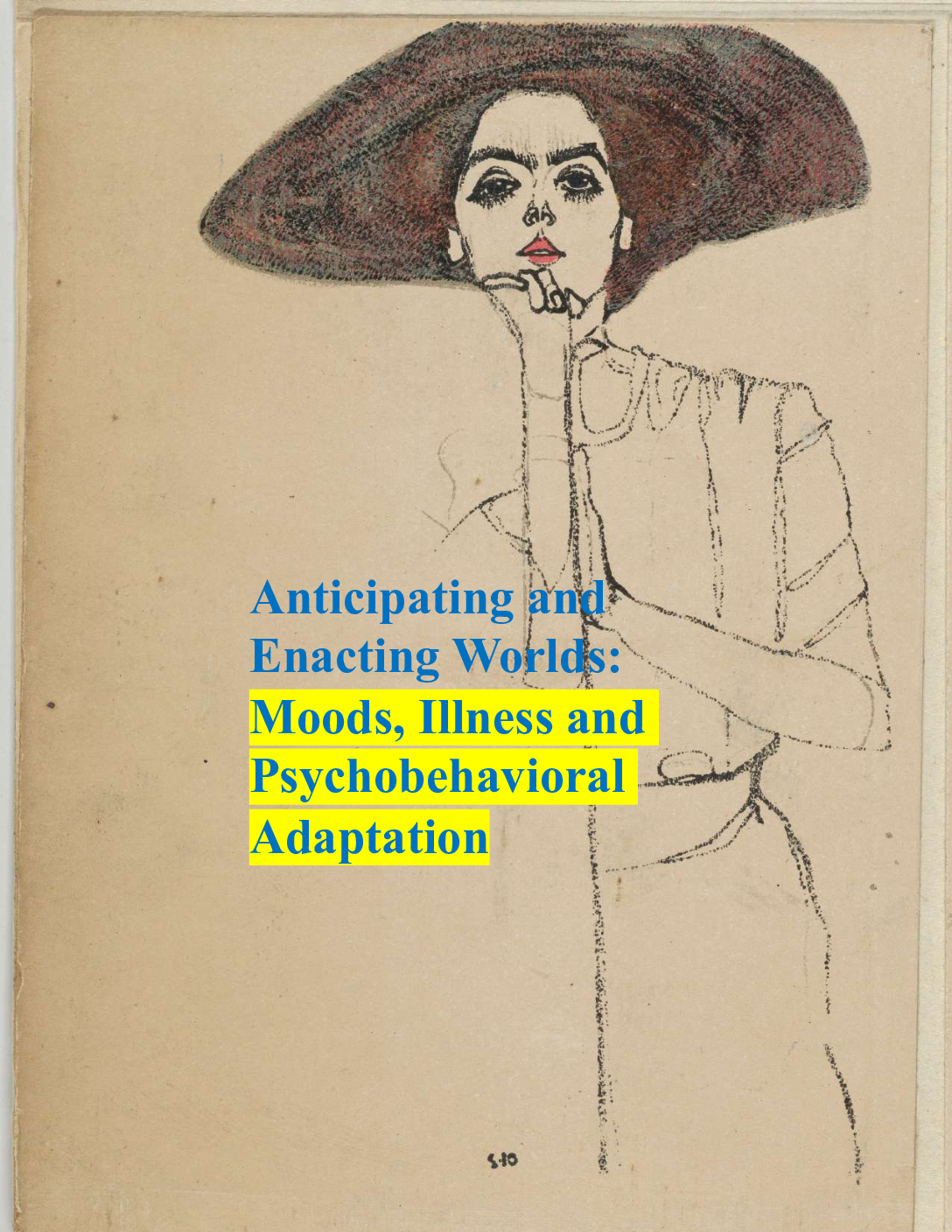
Anticipating and Enacting Worlds: [A challenge to Predictive Processing Theories of Mental Illness] (Phenomenology and the Cognitive Sciences)
Abstract: Predictive processing theorists have claimed PTSD and depression are maladaptive and epistemically distorting because they entail undesirably wide gaps between top-down models and bottom-up information inflows. Without denying this is some- times so, the “maladaptive” label carries questionable normative assumptions. For instance, trauma survivors facing significant risk of subsequent attacks may overestimate threats to circumvent further trauma, “bringing forth” concretely safer personal spaces, to use enactive terminology, ensuring the desired gap between predicted worries and outcomes. The violation of predictive processing can go in the opposite direction too, as when depression coincides with energy-depletion, and hence objectively strenuous situations in which things look farther away because they are (accurately anticipated to be) harder to reach. These examples partly encapsulate what predictive processing theorists call “active inference,” yet with differences. In the first case, actions fruitfully obviate predictions rather than fulfilling them. In the second, mental models do not dysregulate bodily processes, making coping harder. Instead, problems (e.g., personal obstacles, gastric illness) deplete energy, eliciting a depressive and adaptive slow-down. Some predictive proponents apply correspondence criteria when alleging mismatches between internal models and the world, while incongruously asserting that the brain did not evolve to see things veridically, but to execute actions. An alternative is to adopt pluralistic, pragmatic epistemologies suited to the complexity of mind. The upshot is that mental outlooks can depart from the norm without epistemically being distorted and that mismatches between anticipatory worries and outcomes, when they actually exist, can be a measure of adaptive and epistemic success.
Download PDF
Cover image
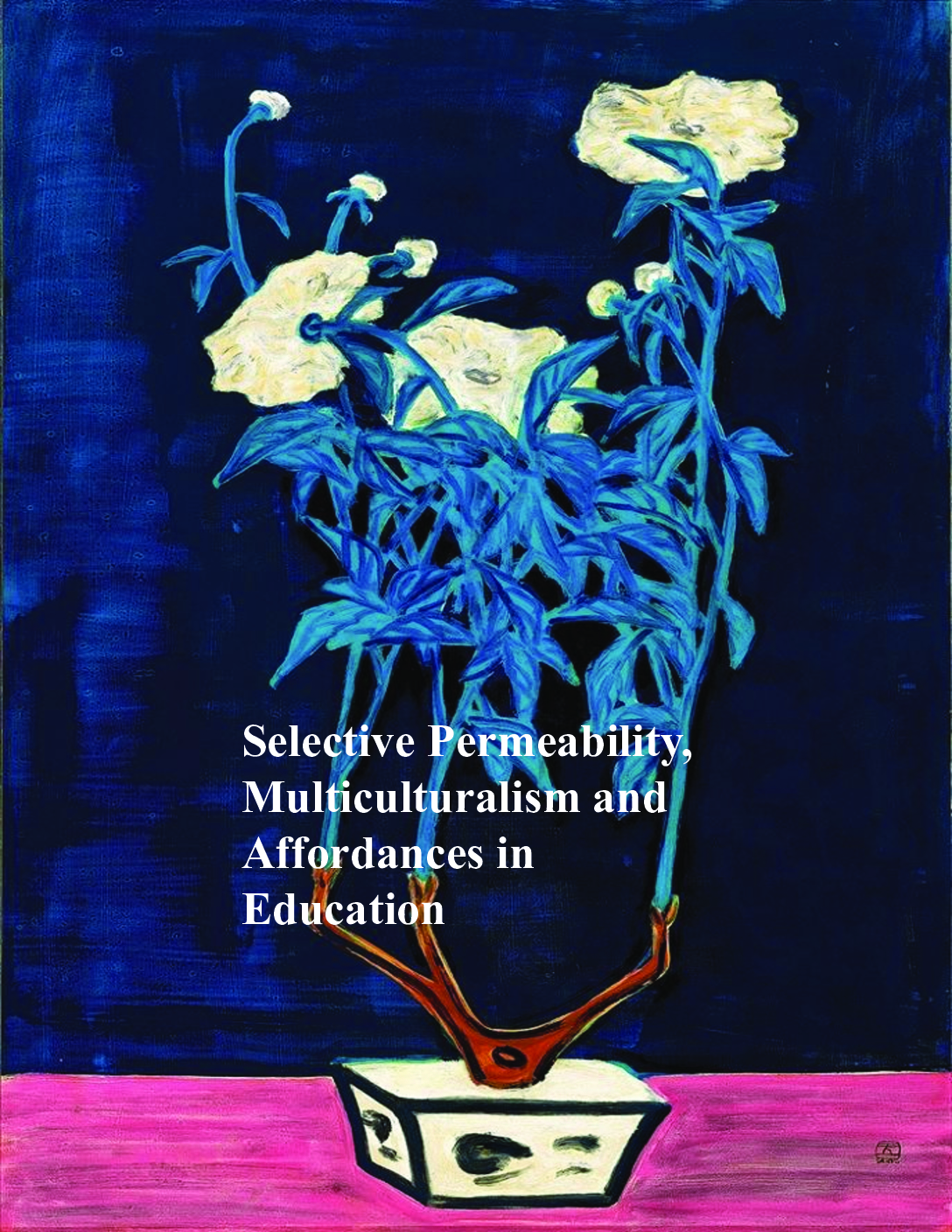
Selective Permeability, Multiculturalism and Affordances in Education. (Philosophical Psychology)
Co-authors: Dag M. Lindemann
Abstract: Selective permeability holds that people’s distinct capacities allow them to do different things in a space, making it unequally accessible. Though mainly applied to urban geography so far, we propose selective permeability as an affordance-based approach for understanding diversity in education. This has advantages. First, it avoids dismissing lower achievements as necessarily coming from “within” students, instead locating challenges in the environment. This implies that settings (not just people) need remedial attention, also raising questions about normative judgments in disability nomenclature. Second, affordances can be negotiated in numerous ways to reach a goal, analogously to how people with missing arms have learned to drive with their feet, so restrictive problem-solving methods are often counterproductive. Third, our approach illuminates how cultural factors ranging from gait styles to language and hence group coordination modulate action possibilities, so that cultural groups may encounter objectively different affordances in the same classroom. But fourth, while fit with environment allows for skill refinement, non-fit can contribute to growth situations, which suggests a degree of selective closure can be desirable. Throughout, we argue social constructs-including educational ones-are literally built or enacted barriers or openings that have reality in environments in the same way that affordances do.
Download PDF
Cover image
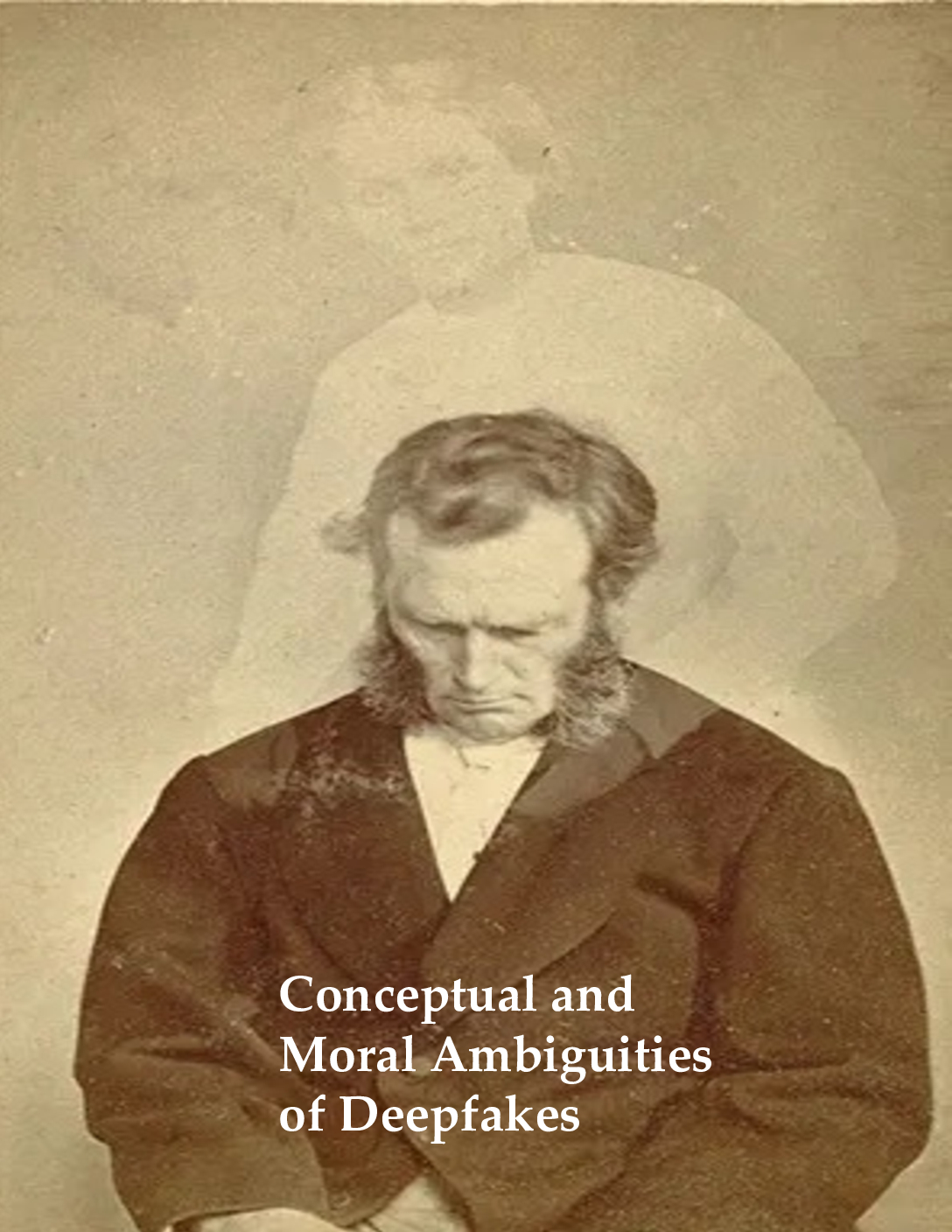
Conceptual and Moral Ambiguities of Deepfakes: A Decidedly Old Turn. (Synthese)
Abstract: Everyday (mis)uses of deepfakes define prevailing conceptualizations of what they are and the moral stakes in their deployment. But one complication in understanding deepfakes is that they are not photographic yet nonetheless manipulate lens-based recordings with the intent of mimicking photographs. The harmfulness of deepfakes, moreover, significantly depends on their potential to be mistaken for photographs and on the belief that photographs capture actual events, a tenet known as the transparency thesis, which scholars have somewhat ironically attacked by citing digital imaging techniques as counterexamples. Combining these positions, this paper sets out two core points: (1) that conceptions about the nature of photography introduce imperatives about its uses; and (2) that popular cultural understandings of photography imply normative ideas that infuse our encounters with deepfakes. Within this, I further raise the question of what moral ground deepfakes occupy that allows them to have such a potentially devastating effect. I show that answering this question involves reinstating the notion that photographs are popularly conceived of as transparent. The rejoinder to this argument, however, is that to take the sting out of deepfakes we must, once again, become skeptical of the veracity of all images, including photoreal ones. This kind of critical mindedness was warranted before the invention of photography for both pictorial imprints and written accounts from various media sources. Given this, along with the fact that photographic trickery is nothing new, deepfakes need not push us into a post-truth epistemic abyss, for they imply a decidedly old turn.
Download PDF
Cover image
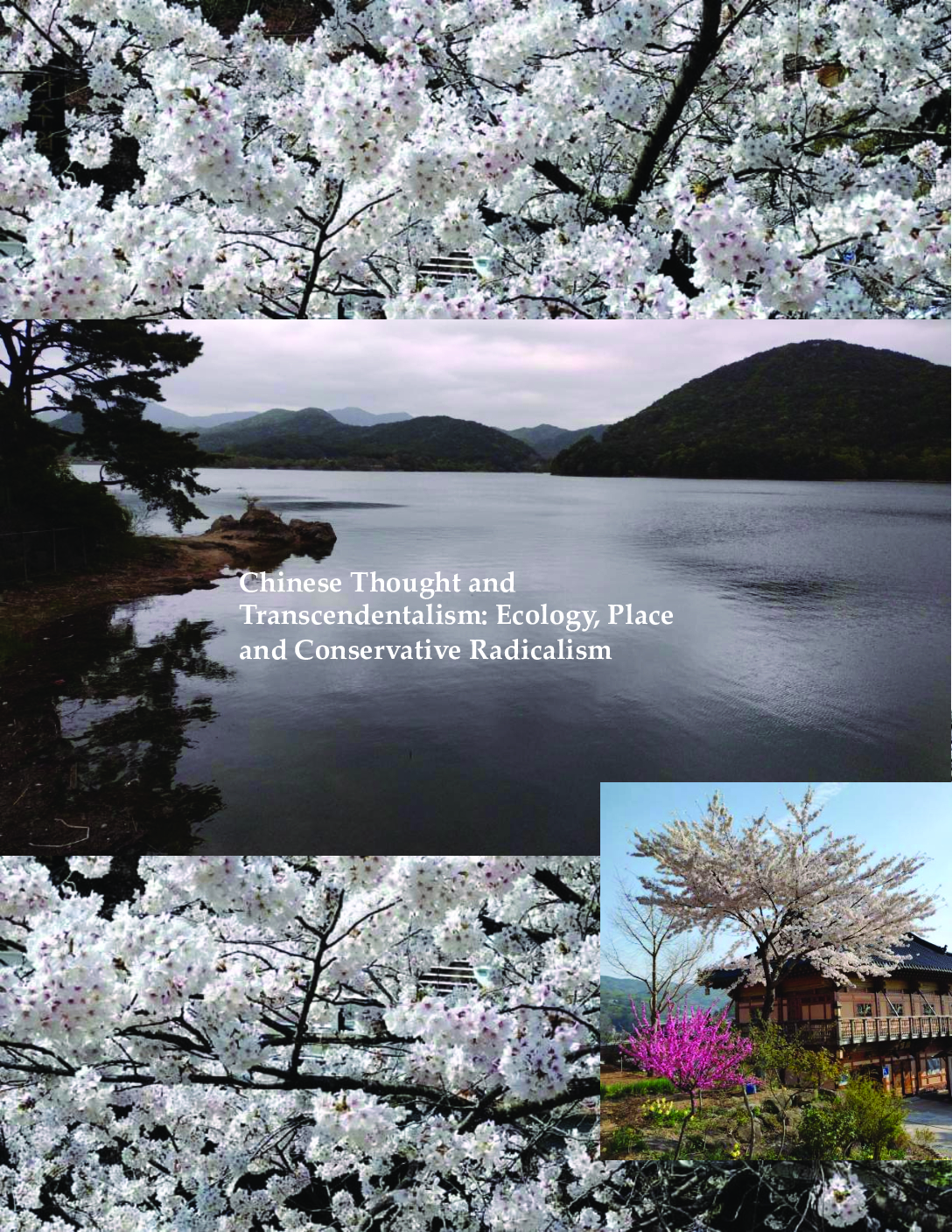
Chinese Thought and Transcendentalism: Ecology, Place and Conservative Radicalism. (Religions)
Abstract: My central claim is that resonances between Transcendentalist and Chinese philosophies are so strong that the former cannot be adequately appreciated without the latter. I give attention to the Analects, the Mengzi and the Tiantai Lotus Sutra, which Transcendentalists read. Because there was conceptual sharing across Chinese traditions, plus evidence suggesting Transcendentalists explored other texts, my analysis includes discussions of Daoism and Weishi, Huayan and Chan Buddhism. To name just some similarities between the targeted outlooks, Transcendentalists adopt something close to wu-wei or effortless action; though hostile to hierarchy, they echo the Confucian stress on rituals or habits; Thoreau’s individualistic libertarianism is moderated by a radical causal holism found in many Chinese philosophies; and variants of Chinese Buddhism get close to Transcendentalist metaphysics and epistemologies, which anticipate radical embodied cognitive science. A specific argument is that Transcendentalists followed some of their Chinese counterparts by conserving the past and converting it into radicalism. A meta-argument is that ideas were exchanged via trade from Europe through North Africa to Western Asia and India into the Far East, and contact with Indigenous Americans led to the same. This involved degrees of misrepresentation, but it nonetheless calls upon scholars to adopt more global approaches.
Download PDF
Cover image
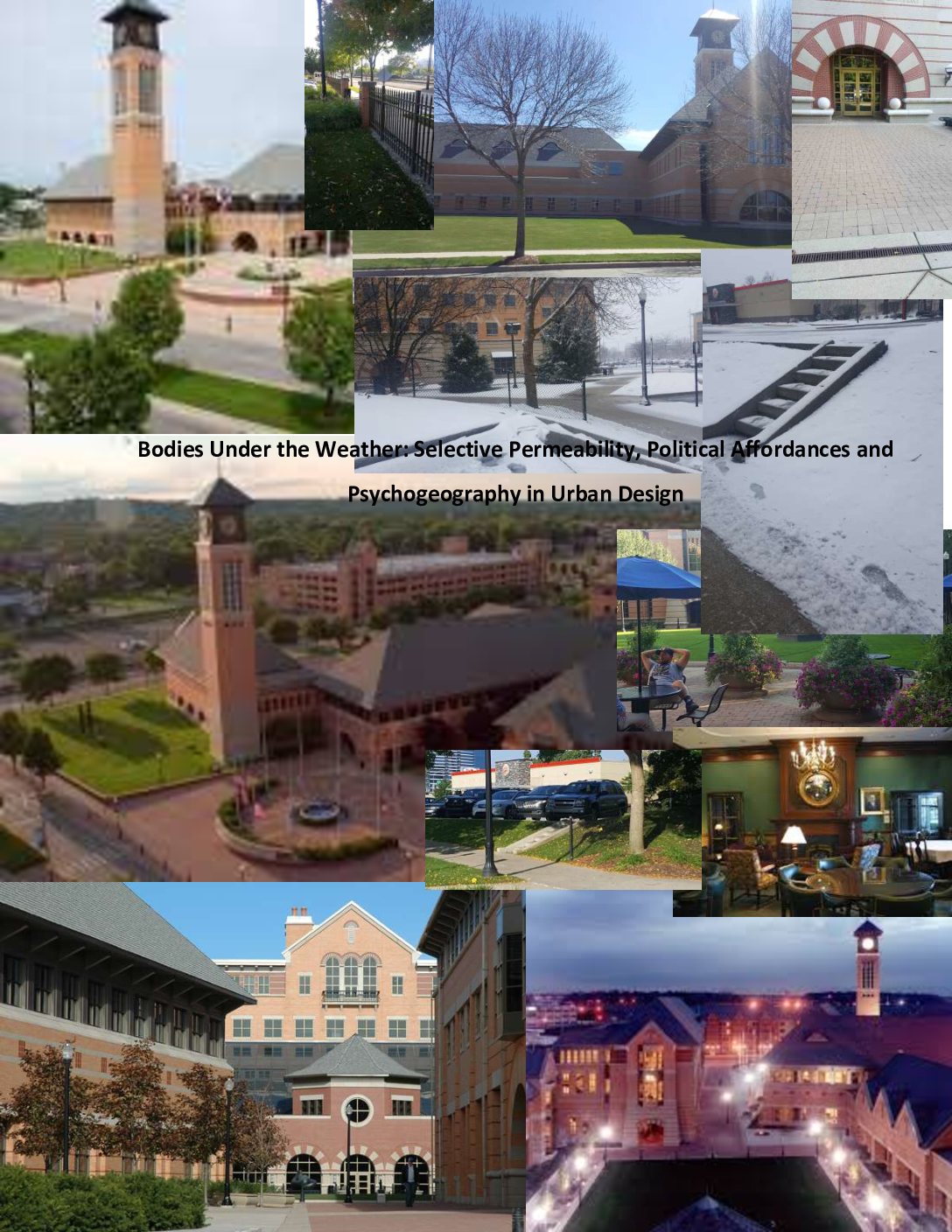
Bodies Under the Weather: Selective Permeability, Political Affordances and Architectural Hostility (Brill)
Co-authors: Mareike Joleen Timm (illustrator)
Abstract: The built environment implicitly regulates bodily movement, whether through decorative curbs marking areas as private or lighting accentuating pimples to drive youths away. Drawing on my own observational research and empirical studies, I argue tacit boundaries such as these are harsher for people under the weather in the threefold sense of suffering from inclement conditions, ill-health and oppressive social climates. Inasmuch as design filters people in these ways, space is “selectively permeable.” I pursue these lines through Shusterman’s somaesthetics and Gibson’s affordance theory. A tenet in somaesthetics is that culture, mind, body and values are codependent. Gibson’s framework likewise holds that body, values and environment are codefined. An icy stairway, for example, may afford falling to the infirmed and look threatening to them more than it does to the healthy, who therefore value it differently. The same pattern occurs in cultural-political environments: a woman may see an urban setting as more threatening than a man because it places her at greater bodily risk, just as citizens in an authoritarian society may face more danger than tourists, experiencing things accordingly. That agents face objectively different obstacles in the same environment allows for selectively permeable design and it makes affordances political.
Download PDF
Cover image
Ars Erotica (Society)
Download PDF
Cover image
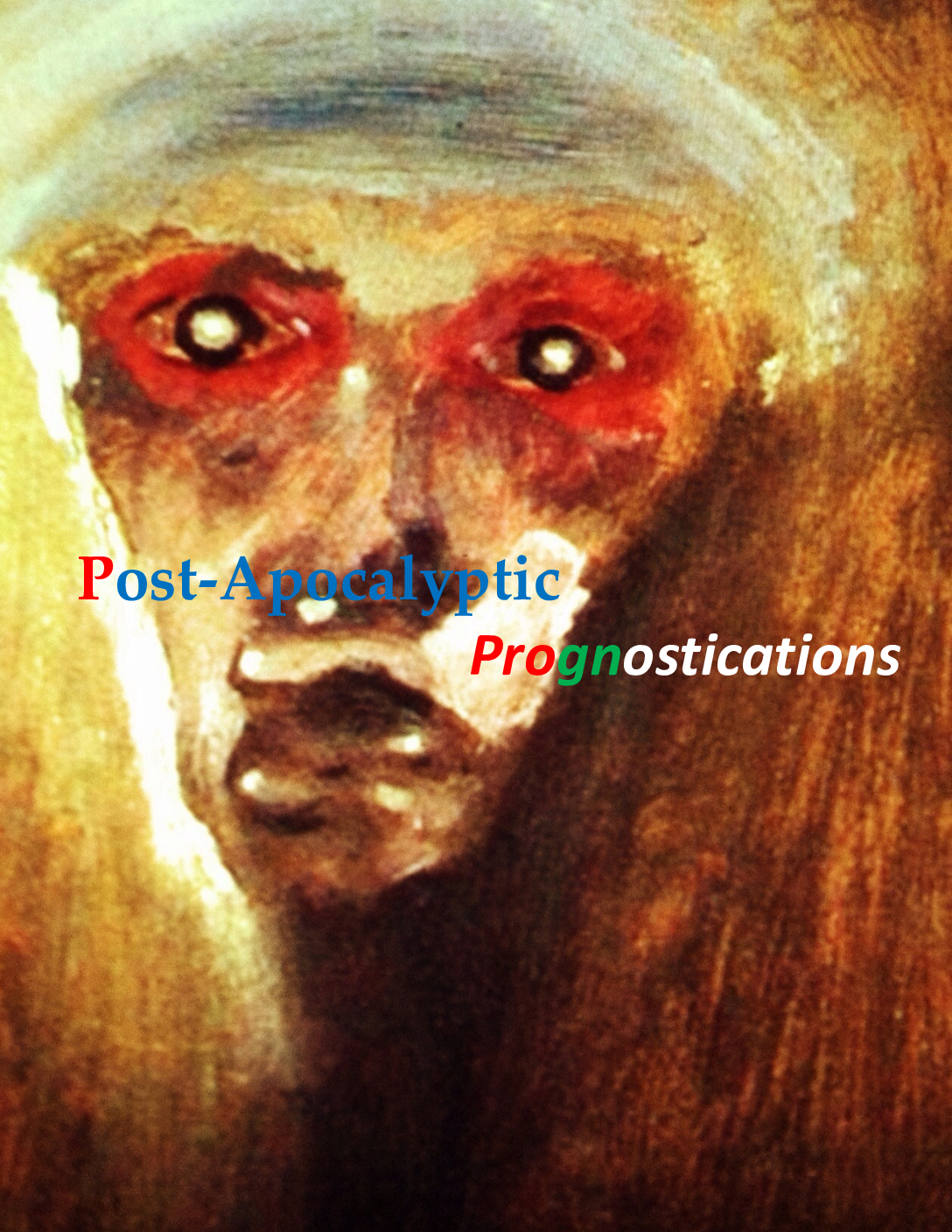
Post-Apocalyptic Prognostications. (Wiley-Blackwell)
Abstract: Catastrophes are cross-cultural themes in ancient stories. 1 Similar motifs can be found in the off-balance mythical past of The Witcher. The narrative is set in a continent undergoing a climate crisis known as the Great Frost, which started after the Conjunction of the Spheres, an event that opened a cosmic gateway that allowed humans to leave a dying world and enter a new one. In a way, this development parallels that of the paleolithic Sahara desert, which had wet spells. These allowed our ancestors northward passage through this normally impenetrable barrier, letting them branch out of Africa. 2 Lurking in the background of all of this and imprinted in humanity’s genes is an ache in people to perpetuate themselves and their communities, a desire molded further through cultural experiences of contending with apocalyptic situations. In The Witcher too, this desire drives many individuals. There’s also a figurative sense in which apocalyptic impulses are in our DNA. Aristotle (384-322 BCE) claimed that all people “by nature desire to know,” and the word “apocalypse” has meanings that relate to truth-seeking. 3 The term is a compound of the Greek “apo-‘un-‘ + kaluptein ‘to cover’.” 4 So “apocalypse” literally means uncovering or revealing. In the hands of Greeks like Plato (c. 429-347), knowledge seeking takes on deathly tones because the sought-after truths are perfect, unchanging, and immaterialin short, the opposite of messy, ever changing, and material biological ways of living. We see this deathly Greek ideal personified in Yennefer: because her nearly ageless beauty and otherworldly wisdom are achieved at the cost of her ability to have children.
Download PDF
Cover image
Folk Punk and Global Indigenous Philosophies. (Carus Books)
Download PDF
Cover image
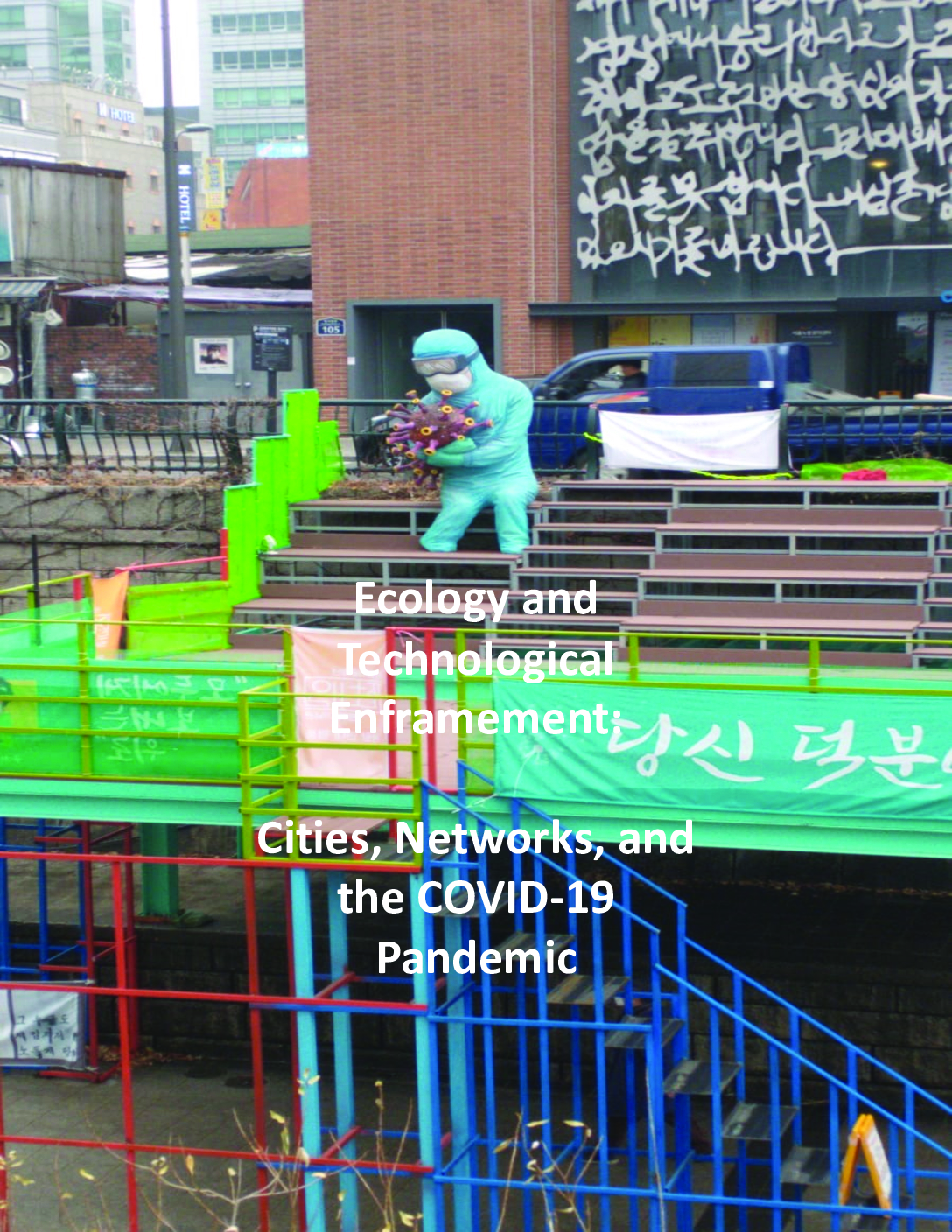
Ecology and Technological Enframement: Cities, Networks, and the COVID-19 Pandemic (Routledge)
Co-authors: Alice Andrea Cortes
Abstract: Though past commentators have attacked cities as corrupt, dirty places, it is almost too obvious to need stating that a sustainable future depends on them. This is because most people live in cities and because the streamlined use of urban space brings a wide range of efficiencies. Simultaneously, urban living and associated technologies may impact psychology such that people see humans and their cities as outside of nature, which has been shown to reduce concern for the wellbeing of the planet. Exploring these points in the context of the COVID-19 pandemic, we speculate on psychologically fueled environmental consequences of remote technologies. One possibility is that they may diminish contact with what we colloquially call “nature,” thereby reducing concern for it. Another possibility is that remote technologies may promote personalized work rhythms, allowing people more time in the outdoors, amplifying concern for the environment. Recognizing that vulnerable segments of the population are currently excluded from this second option, we optimistically sketch scenarios in which technologies may—somewhat ironically—help humankind escape technological entrapment, freeing people from a variety of backgrounds to reconnect in caring ways with nature.
Download PDF
Cover image
The Shadow Realities of Indiana Jones (Wiley Blackwell)
Co-authors: M. Dixon (second author)
Download PDF
Cover image
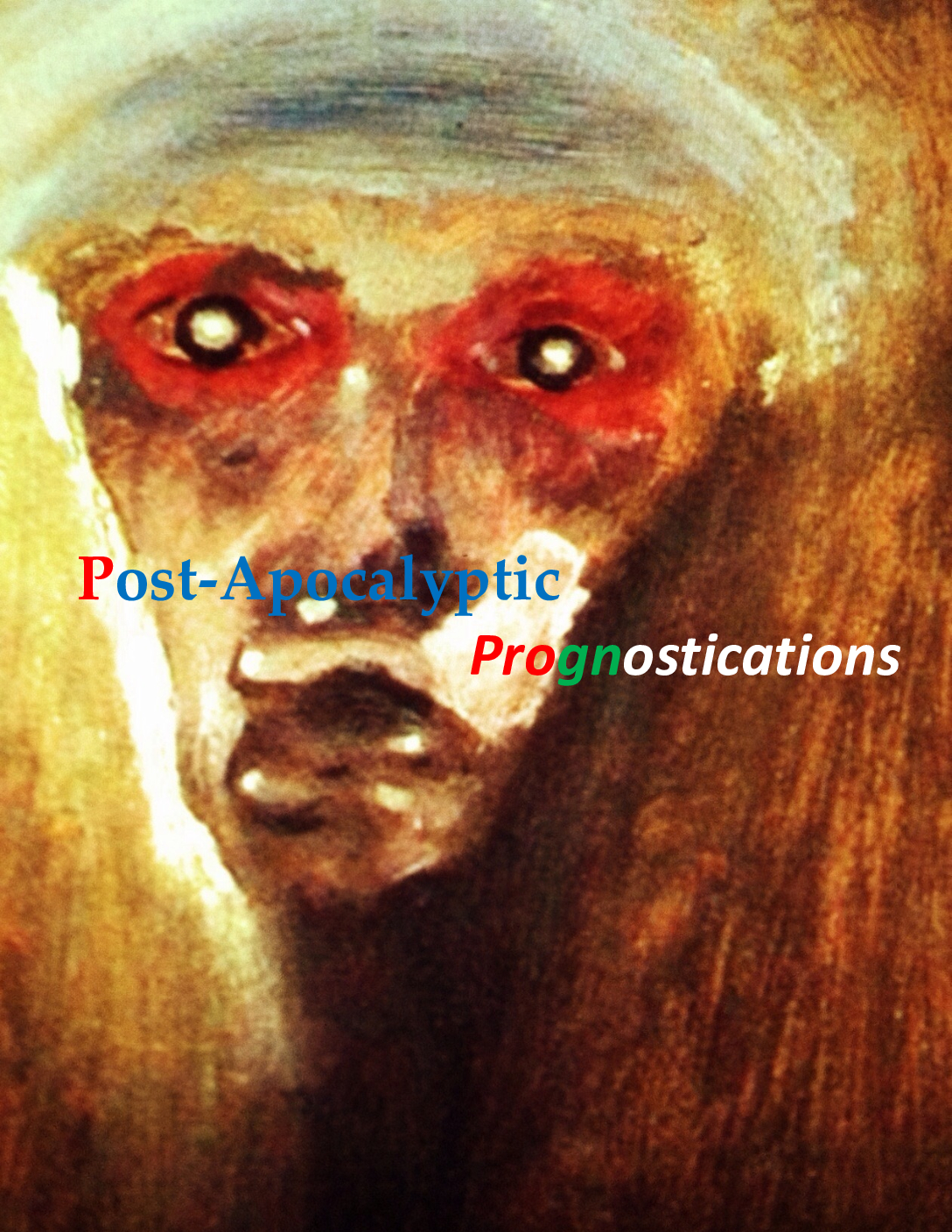
Post-Apocalyptic Prognostications (Not mentioned)
Abstract: Catastrophes are cross-cultural themes in ancient stories. 1 Similar motifs can be found in the off-balance mythical past of The Witcher. The narrative is set in a continent undergoing a climate crisis known as the Great Frost, which started after the Conjunction of the Spheres, an event that opened a cosmic gateway that allowed humans to leave a dying world and enter a new one. In a way, this development parallels that of the paleolithic Sahara desert, which had wet spells. These allowed our ancestors northward passage through this normally impenetrable barrier, letting them branch out of Africa. 2 Lurking in the background of all of this and imprinted in humanity’s genes is an ache in people to perpetuate themselves and their communities, a desire molded further through cultural experiences of contending with apocalyptic situations. In The Witcher too, this desire drives many individuals. There’s also a figurative sense in which apocalyptic impulses are in our DNA. Aristotle (384-322 BCE) claimed that all people “by nature desire to know,” and the word “apocalypse” has meanings that relate to truth-seeking. 3 The term is a compound of the Greek “apo-‘un-‘ + kaluptein ‘to cover’.” 4 So “apocalypse” literally means uncovering or revealing. In the hands of Greeks like Plato (c. 429-347), knowledge seeking takes on deathly tones because the sought-after truths are perfect, unchanging, and immaterialin short, the opposite of messy, ever changing, and material biological ways of living. We see this deathly Greek ideal personified in Yennefer: because her nearly ageless beauty and otherworldly wisdom are achieved at the cost of her ability to have children.
Download PDF
Cover image
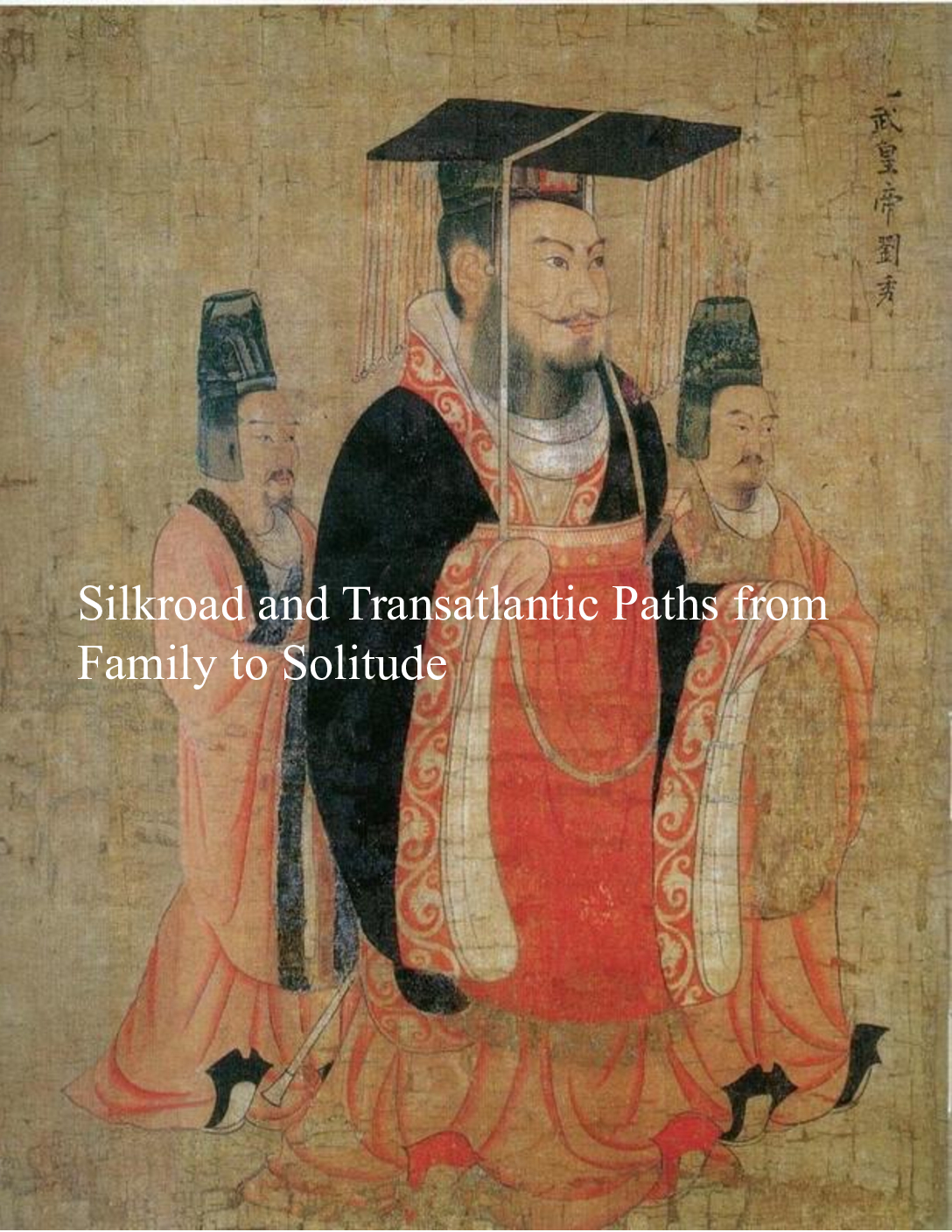
Silkroad and Transatlantic Paths from Family to Solitude (Open Court)
Co-authors: Iris Hiu Man Yeung (second author)
Download PDF
Cover image
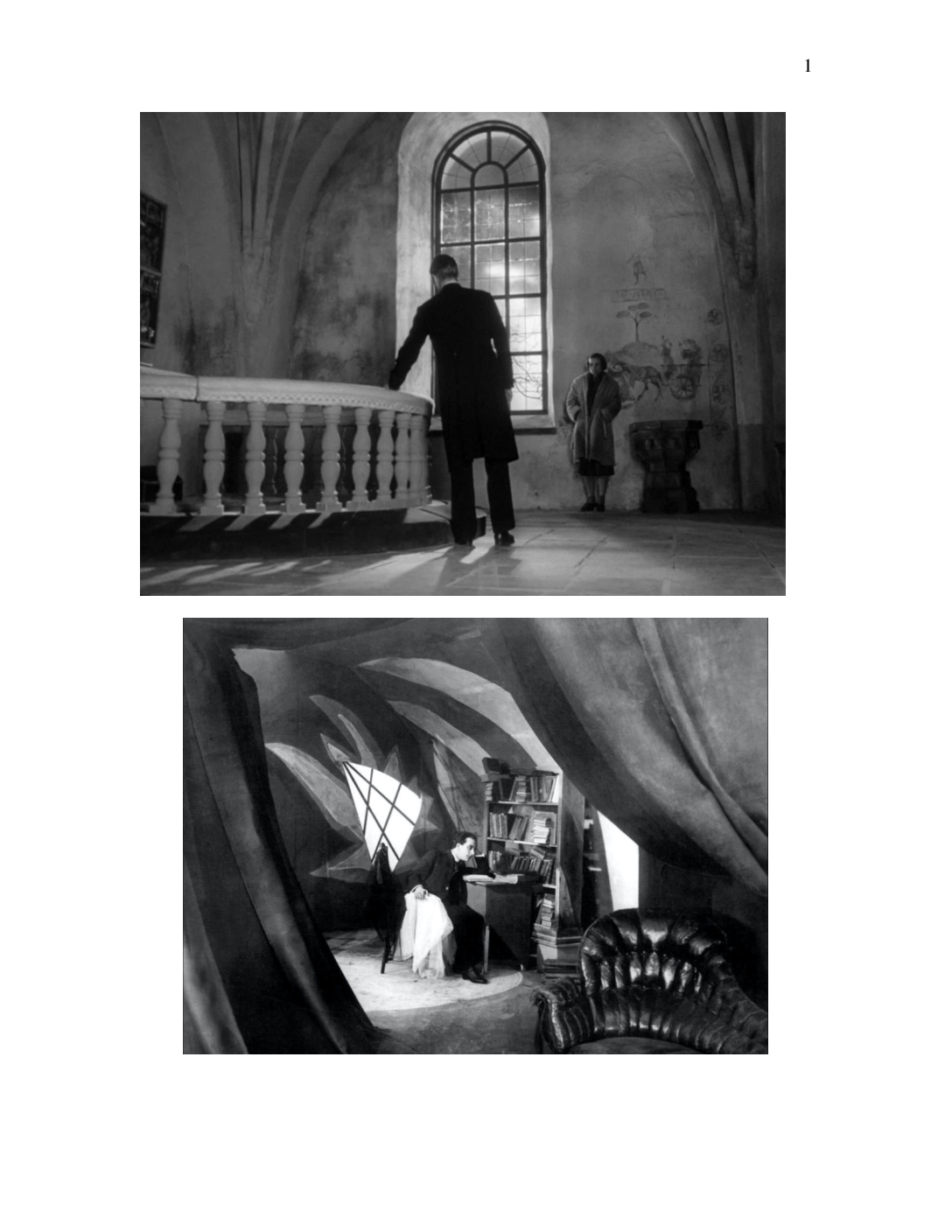
Movies as Environments (Mongrel Matter)
Co-authors: Farida Youssef (second author)
Download PDF
Cover image
Emotional Environments: Selective Permeability, Political Affordances and Normative Settings. (Topoi)
Abstract: I begin this article with an increasingly accepted claim: that emotions lend differential weight to states of affairs, helping us conceptually carve the world and make rational decisions. I then develop a more controversial assertion: that environments have nonsubjective emotional qualities, which organize behavior and help us make sense of the world. I defend this from ecological and related embodied standpoints that take properties to be interrelational outcomes. I also build on conceptions of experience as a cultural phenomenon, one that coheres around shared environmental contours and public emotional concerns, introducing normative constraints (or what might be called “world grammars”). Endorsing this outlook suggests an argument for the view that cultural spaces have affectively charged, non-subjective, normative openings and closures. These openings and closures engender selectively permeable barriers which cordon space without physically preventing entry, as seen with decorative half walls and elevation changes. An area with such barriers may look emotionally hostile to, say, the dispirited homeless who are in fact less welcome there. Outcomes like these might be thought of as “political affordances.” These affordances can be regarded as normative openings and closures that implicitly filter, and hence segregate, according to various social divisions. Although registering political affordances requires more than the detection of ambient arrays, the notion retains core Gibsonian ideas: that affordances are values, that these values are linked with how a space can be used, and that the existence and nature of such affordances is not a subjective matter.
Download PDF
Cover image
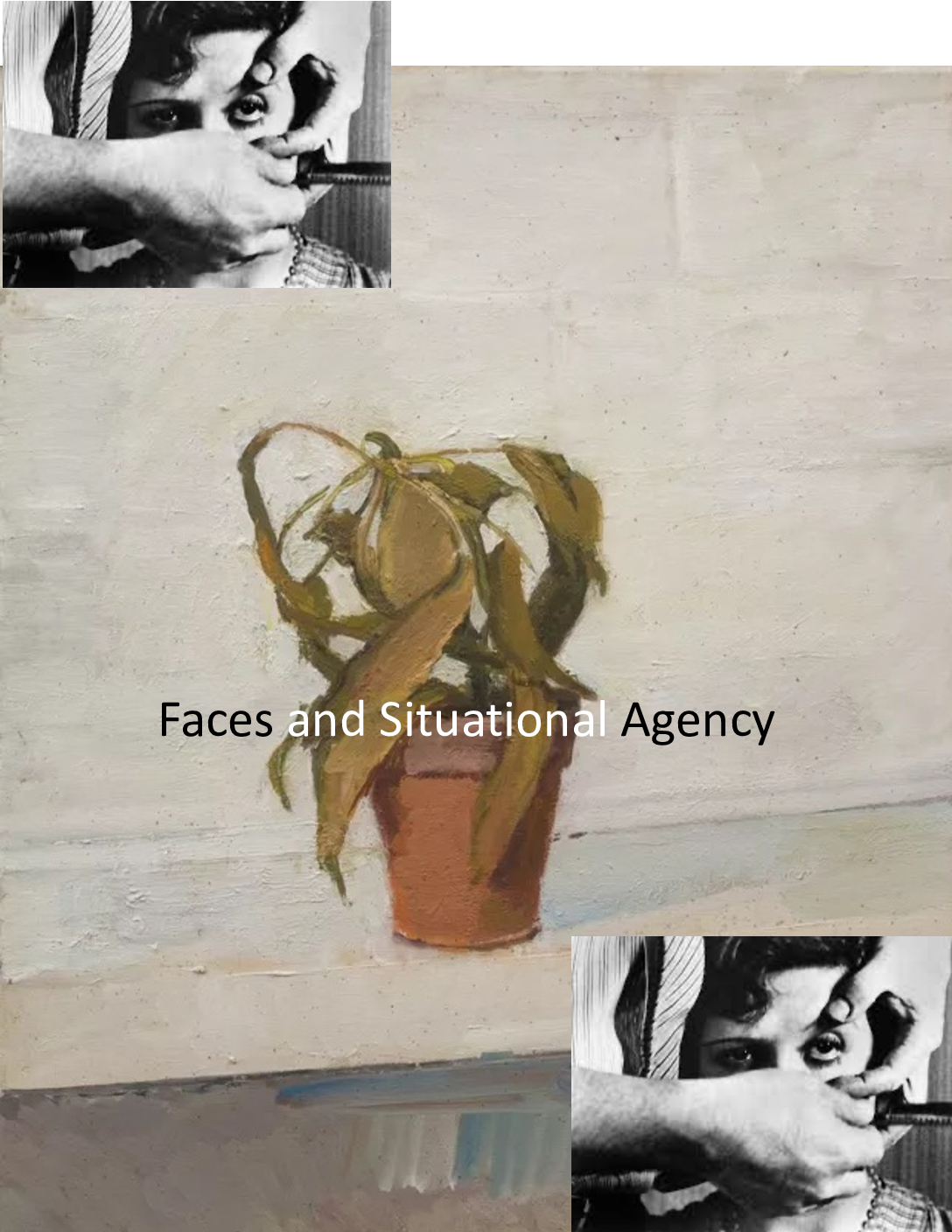
Faces and Situational Agency (Topoi)
Co-authors: Giovanni Rolla (second author)
Abstract: Though there are many challenges to Ekman’s thesis that there are basic emotions with universal corresponding facial expressions, our main criticism revolves around the extent to which grounding situations alter how people read faces. To that end, we recruit testifying experimental studies that show identical faces expressing varying emotions when contextualized differently. Rather than dismissing these as illusions, we start with the position-generally favored by embodied thinkers-that situations are primary: they are where specifiable and hence knowable properties first show up. We further argue that situationally inflected emotional expressions are informationally meaningful. We reject the idea that reading expressions is primarily about ascertaining internal mental states, arguing instead that people are registering overall situations when looking at faces. However, if mind is understood as a situated phenomenon that extends into active ecological frames, then one can still argue that mindreading is going on. Although we do not claim isolated things like cliffs or cars have agency, we speculate networked systems with cliffs, people, cars, bears, etc., collectively function with intentionality, more so if advancing a robust situated mind thesis, contra figures like Dennett who argue that people overimpute mind to things. Our position has practical implications insofar as it casts doubts on recent attempts to develop AI systems that extract emotional intent out of facial expressions since many of these systems are grounded on Ekman’s basic view.
Download PDF
Cover image
Learning Korean Culture: Embodied Visuality (Hungarian Academy of Sciences)
Co-authors: Joanne Mun (second author)
Download PDF
Cover image
Psychological Expanses of Dune: Indigenous Philosophy, Americana, and Existentialism. (Wiley-Blackwell)
Abstract: Like philosophy itself, Dune explores everything from politics to art to life to reality, but above all, the novels ponder the mysteries of mind. Voyaging through psychic expanses, Frank Herbert hits upon some of the same insights discovered by indigenous people from the Americas. Many of these ideas are repeated in mainstream American and European philosophical traditions like pragmatism and existential phenomenology. These outlooks share a regard for mind as ecological, which is more or less to say that minds extend beyond the brain into the rest of the body and the surrounding environment. The cross-cultural strands in Dune tie closely to Herbert’s life and interests. An outdoorsman born in the Pacific West, he had an abiding bond with a friend from the Quileute tribe, Howie Hansen. Herbert advocated for aboriginal rights and crafted well-intentioned if slightly stereotypical tales about indigenous characters, partly based on his visits with Northwest tribes. Carl Jung (1875-1961), whose idea of collective consciousness echoes aboriginal views, was among Herbert’s European influences. So was existential phenomenology, especially as developed by Martin Heidegger (1889-1976). The names of characters in one of Herbert’s novels—The Santaroga Barrier—in fact coincide with terms that Heidegger used to articulate how emotionally colored coping with our environment defines our existence. Many indigenous philosophers have treated phenomenology and its American cousin pragmatism in approving ways. Indeed, the ideas of North America’s first inhabitants seem to have been absorbed by pragmatists and even earlier by transcendentalists like Ralph Waldo Emerson (1803-1882) and Henry David Thoreau (1817-1862). These different philosophies all advance a place-based psychology. Anne Waters, herself of mixed tribal heritage, generalizes the mindset of her people this way: “American Indian consciousness, and hence American Indian identity is … interdependent with our land base.” Lee Hester, a Choctaw thinker, adds that practices—not mere beliefs—are most important for native thought. American transcendentalists and pragmatists, as well as European phenomenologists, similarly see hands-on practices and environmental interactions as the core of experience. Extending this a little, they sometimes suggest experience isn’t individual but instead cultural. “Culture” is here understood as interactions within communities that define our worlds and experiences, as when we talk about the “French experience,” “culture” or “world,” or the “experience of parenthood.” This theme also shows up in indigenous thought. Exploring the Dune universe, we find everything from land-based concepts of personal identity, to the idea of sharpening the mind through hands-on training, to collective notions of experience in cooperative tribes or through the genetic memory of central characters. The stories explore fate versus free will in cosmic contexts, introducing views from indigenous thought and the pragmatic philosophy of William James (1842-1910). Different forms of spiritualism mingle to shape minds and cultural mixtures around the globe, and the same occurs in the Dune series. The customs and personalities of characters fuse elements from Buddhism, Christianity, Hinduism, Judaism, Taoism, and especially Islam. The series not only highlights that religion shapes psychology, but also that faith connects to place, especially paralleling Judeo-Christian-Islamic desert faiths. In capturing these points, the Dune novels show that “our values, our lifestyles and even the ways we think and feel have been strongly influenced by our locations in history and geography. The study of the human mind is fundamentally the study of place.”
Download PDF
Cover image
Intelligenza artificiale e robotica: le sfide relative all’embodiment, all’emozione e al contesto. (Plexus)
Download PDF
Cover image
Aesthetics and Action: Situations, Emotional Perception and the Kuleshov Effect. (Synthese)
Abstract: This article focuses on situations and emotional perception. To this end, I start with the Kuleshov effect wherein identical shots of performers manifest different expressions when cut to different contexts. However, I conducted experiments with a twist, using Darth Vader and non-primates, and even here expressions varied with contexts. Building on historically and conceptually linked Gibsonian, Gestalt, phenomenological and pragmatic schools, along with consonant experimental work, I extrapolate these results to defend three interconnected points. First, I argue that while perceiving expression is sometimes about reading minds, it is more squarely about perceiving solicitations or closures for action. Second, I frame expressions as a subcategory of Gibson’s affordances. This includes those showing up through context, in turn suggesting Kuleshov-like scenarios are not mere perceptual tricks. Third, I maintain that situations—with or without other human beings—have action-motivating expressive qualities or what Gestalt theorists called physiognomic characters, following Werner. These likewise emerge through ecological relations, and are very much like affordances and in the world as much as them. With resemblance theories, my account agrees that we perceive expression in the world. However, it indicates a broad range of cases in which expression shows up as consequences of overall situations that solicit or close actions, as opposed to mere resemblance between entities and human expressions.
Download PDF
Cover image
Africapitalism, Ubuntu and Sustainability. (Environmental Ethics)
Abstract: Ubuntu originated in small-scale societies in precolonial Africa. It stresses metaphysical and moral interconnectedness of humans, and newer Africapitalist approaches absorb ubuntu ideology, with the aims of promoting community wellbeing and restoring a love of local place that global free trade has eroded. Ecological degradation violates these goals, which ought to translate into care for the nonhuman world, in addition to which some African thought systems promote environmental concern as a value in its own right. The foregoing account is reinforced by field research looking at hunting operations that appear—counterintuitively—to reconcile conservation with business imperatives and local community interests. Though acknowledging shortcomings, I maintain that these enterprises do, by and large, adopt Africapitalist and ubuntu attitudes to enhance community wellbeing, environmental sustainability and long-term economic viability. I also examine how well-intentioned Western conservation agendas are neocolonial impositions that impede local control while exacerbating environmental destruction and socioeconomic hardship. Ubuntu offers a conciliatory epistemology, which Africapitalism incorporates, and I conclude by considering how standard moral theories and political divisions become less antagonistic within these frameworks, so that even opponents can find common cause.
Download PDF
Cover image
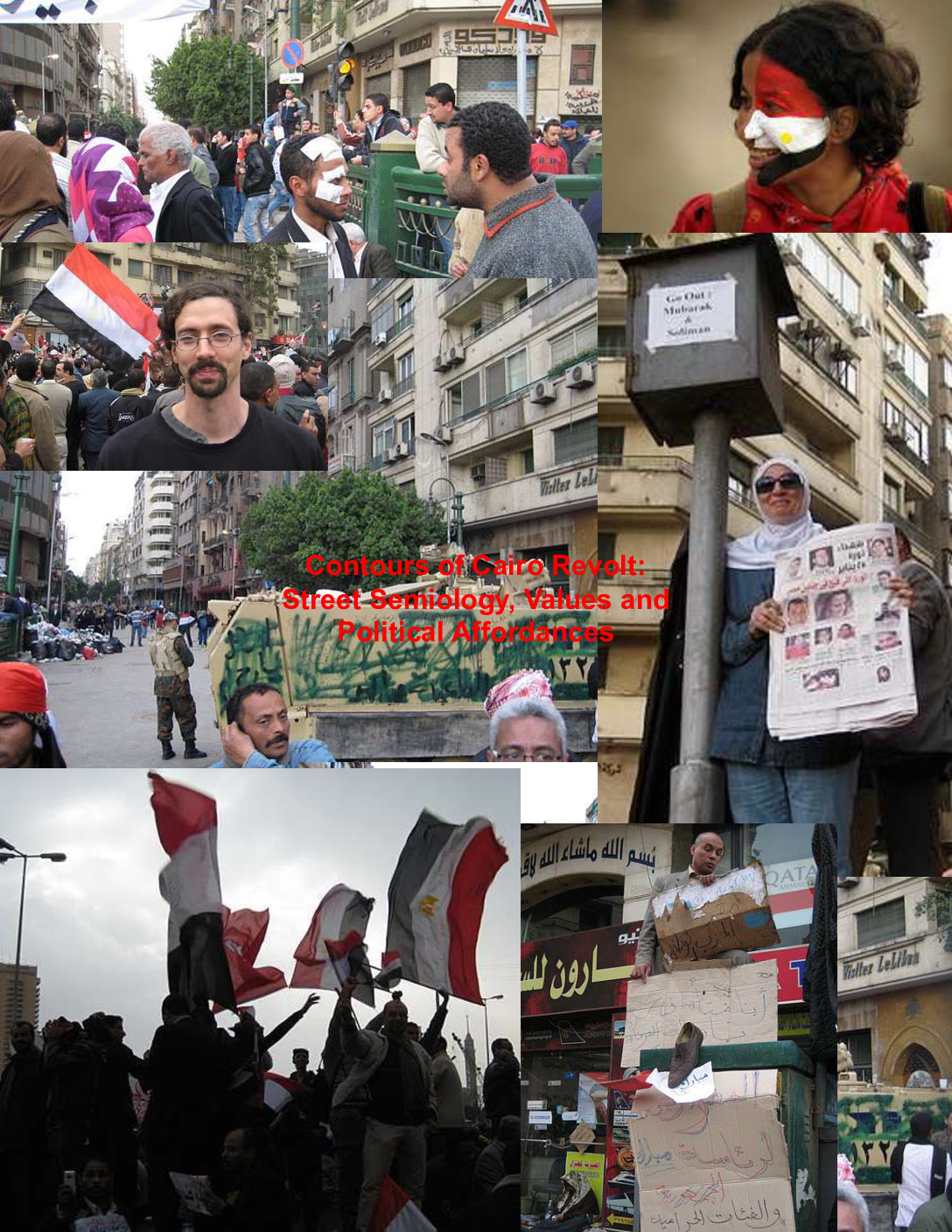
Contours of Cairo Revolt: Street Semiology, Values and Political Affordances. (Topoi)
Abstract: This article contemplates symbols and values inscribed on Cairo’s landscape during the 2011 revolution and the period since, focusing on Tahrir Square and the role of the Egyptian flag in street discourses there. I start by briefly pondering how intertwined popular narratives readied the square and flag as emblems of dissent. Next I examine how these appropriations shaped protests in the square, and how military authorities who retook control in 2013 re-coopted the square and flag, with the reabsorption of each critical to that of the other and executed in the same place: Tahrir. Pro-military factions have created the pretense that they were for the revolution by altering the square and structures around it. Furthermore, the square has remained open to the public, but ceased to be inviting. This relates to post-revolutionary alterations that psychologically repel entry. I consider these changes in light of affordance theory, value sensitive design research and especially the defensible space model, arguing that Tahrir Square has been symbolically cordoned and closed.
Download PDF
Cover image
Phenomenology and Ecology: Art, Cities, and Cinema in the Pandemic (Polish Journal of Aesthetics)
Co-authors: Alice Andrea Cortés (first author)
Abstract: COVID-19 infects cities, here grasped as quasi-living functioning systems, and the changes inflicted can poetically open us to certain things. Drawing on ecological psychology, we maintain that this brings people into contact with different realities depending on their overall wellbeing, arguing that the aesthetic experience of cities accordingly varies. We then consider iterations of these ideas in dystopian cinema, which portrays global threats altering human relations with technology, art, and the world.
Download PDF
Cover image
Enactive Pragmatism and Ecological Psychology. (Frontiers in Psychology)
Abstract: A widely cited roadblock to bridging ecological psychology and enactivism is that the former identifies with realism and the latter with constructivism, which critics charge is subjectivist. A pragmatic reading, however, suggests non-mental forms of constructivism that simultaneously fit core tenets of enactivism and ecological realism. After advancing a pragmatic version of enactive constructivism that does not obviate realism, I reinforce the position with an empirical illustration: P. polycephalum, a communal unicellular organism that leaves slime trails that form chemical barriers that it avoids in foraging explorations. Here, environmental building and sensorimotor engagement are part of the same process, with P. polycephalum coordinating around self-created, affordance-bearing geographies, which nonetheless exist independently in ways described by ecological realists. For ecological psychologists, affordances are values, meaning values are external to the perceiver. I argue that agent-enacted values have the same status and thus do not obviate ecological realism, nor generate subjectivism. The constructivist-realist debate organizes around the emphasis that enactivists and ecological theorists respectively place on the inner constitution of organisms versus the structure of environments. Building on alimentary themes introduced in the P. polycephalum example and also in Gibson’s work, I go on to consider how environment, brain, visceral systems and even bacteria within them enter perceptual loops. This highlights almost unfathomable degrees of mutually modulating internal and external synchronization. It also shows instances in which internal conditions alter worldly configurations and invert values, in Gibson’s sense of the term, albeit without implying subjectivism. My aim is to cut across the somatic focus of enactive constructivism and the external environment-oriented emphasis of ecological realism, and show that enactivism can enrich ecological accounts of value.
Download PDF
Cover image
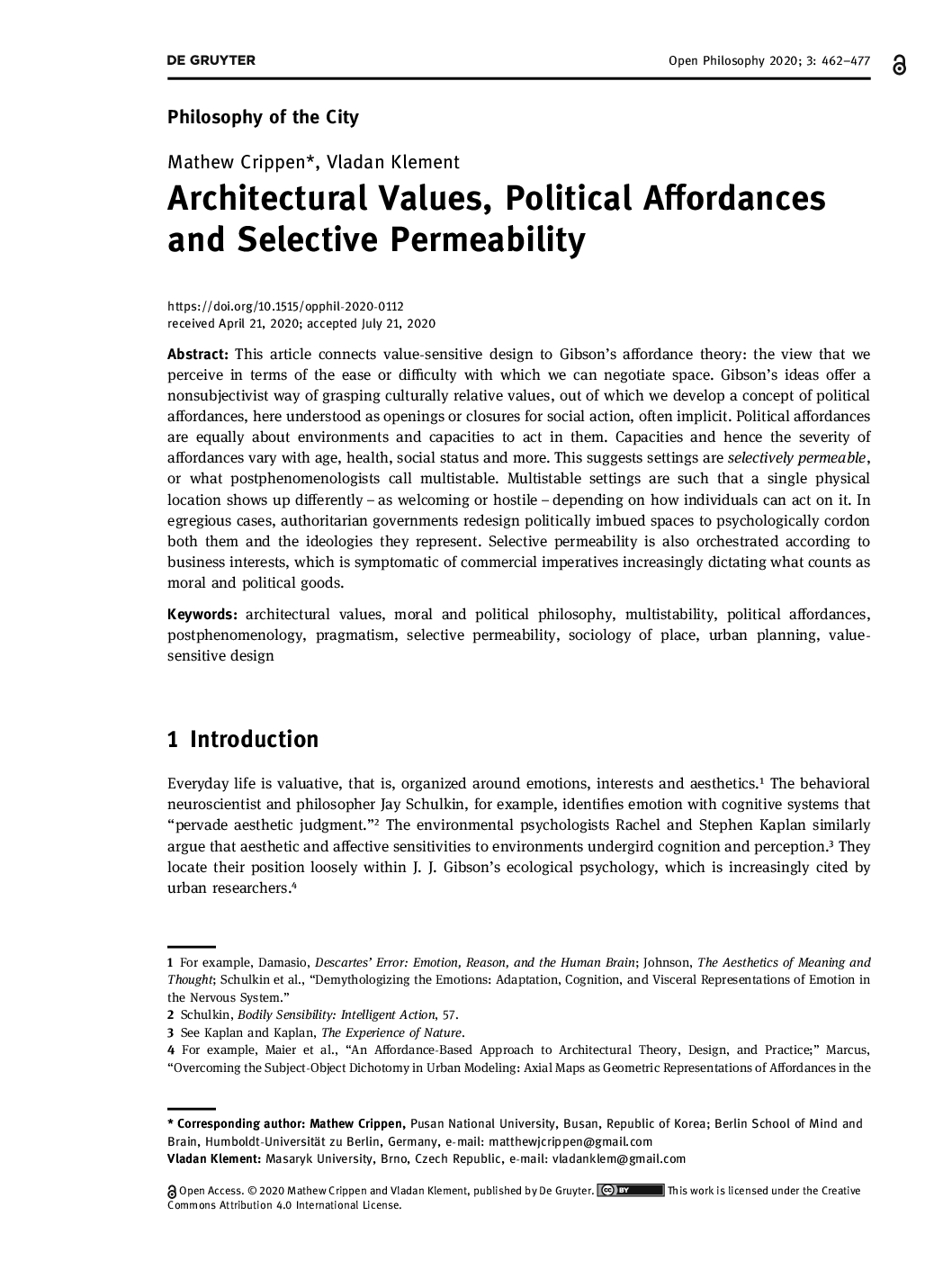
Architectural Values, Political Affordances and Selective Permeability (OpenPhilosophy)
Co-authors: Vladan Klement
Abstract: This article connects value-sensitive design to Gibson’s affordance theory: the view that we perceive in terms of the ease or difficulty with which we can negotiate space. Gibson’s ideas offer a nonsubjectivist way of grasping culturally relative values, out of which we develop a concept of political affordances, here understood as openings or closures for social action, often implicit. Political affordances are equally about environments and capacities to act in them. Capacities and hence the severity of affordances vary with age, health, social status and more. This suggests settings are selectively permeable, or what postphenomenologists call multistable. Multistable settings are such that a single physical location shows up differently-as welcoming or hostile-depending on how individuals can act on it. In egregious cases, authoritarian governments redesign politically imbued spaces to psychologically cordon both them and the ideologies they represent. Selective permeability is also orchestrated according to business interests, which is symptomatic of commercial imperatives increasingly dictating what counts as moral and political goods.
Download PDF
Cover image
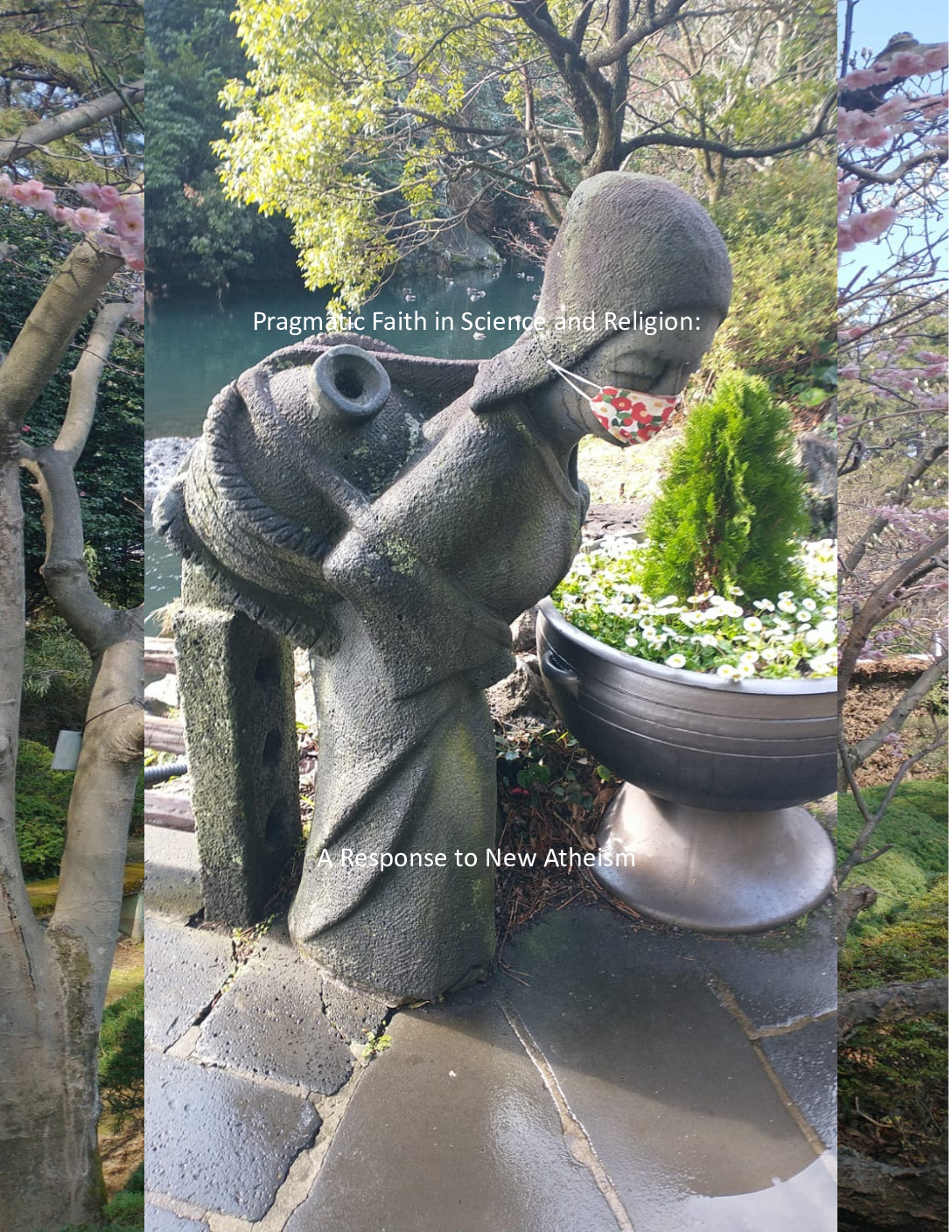
Pragmatic Faith in Science and Religion: A Response to New Atheism. (Quadranti – Rivista Internazionale di Filosofia Contemporanea)
Abstract: It is a cliché to say science and religion are antagonistic. The outlook is often promoted by religious people uneducated in the workings of science, and equally by scientifically-oriented individuals with little experience of religion. This essay challenges presumptions about the irreconcilability of science and religion, focusing on action organizing metaphysical principles infusing both. The aim, however, is not to evaluate proofs for God’s existence, nor defend young earth creationism, nor the notion that there is one true religion, nor still the thesis that morality demands divine guidance-all positions that critics commonly raise to demonstrate the stupidity of religion, even though such views are hardly universal among theists. The aim is instead to expand what one can rationally accept, leaving it to individuals to decide what to believe. Central to my arguments is the concept of pragmatic faith. The notion holds that willingness to act measures strength of conviction and that actions generate empirical results that may either verify or disconfirm what was initially held without adequate evidence. Such a stance is a necessary ingredient in both scientific and spiritual activities, suggesting a rebuttal to New Atheists, who narrowly identify religion with superstitious irrationality.
Download PDF
Cover image
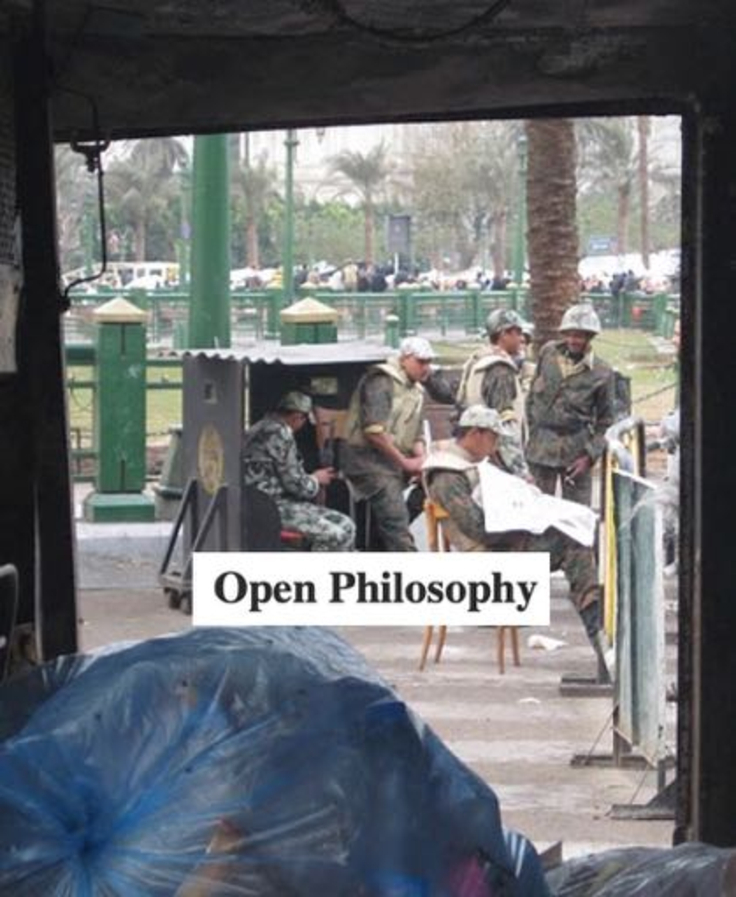
Architectural Values, Political Affordances and Selective Permeability. (Open Philosophy)
Co-authors: Vladan Klement
Abstract: This article connects value-sensitive design to Gibson’s affordance theory: the view that we perceive in terms of the ease or difficulty with which we can negotiate space. Gibson’s ideas offer a nonsubjectivist way of grasping culturally relative values, out of which we develop a concept of political affordances, here understood as openings or closures for social action, often implicit. Political affordances are equally about environments and capacities to act in them. Capacities and hence the severity of affordances vary with age, health, social status and more. This suggests settings are selectively permeable, or what postphenomenologists call multistable. Multistable settings are such that a single physical location shows up differently-as welcoming or hostile-depending on how individuals can act on it. In egregious cases, authoritarian governments redesign politically imbued spaces to psychologically cordon both them and the ideologies they represent. Selective permeability is also orchestrated according to business interests, which is symptomatic of commercial imperatives increasingly dictating what counts as moral and political goods.
Download PDF
Cover image
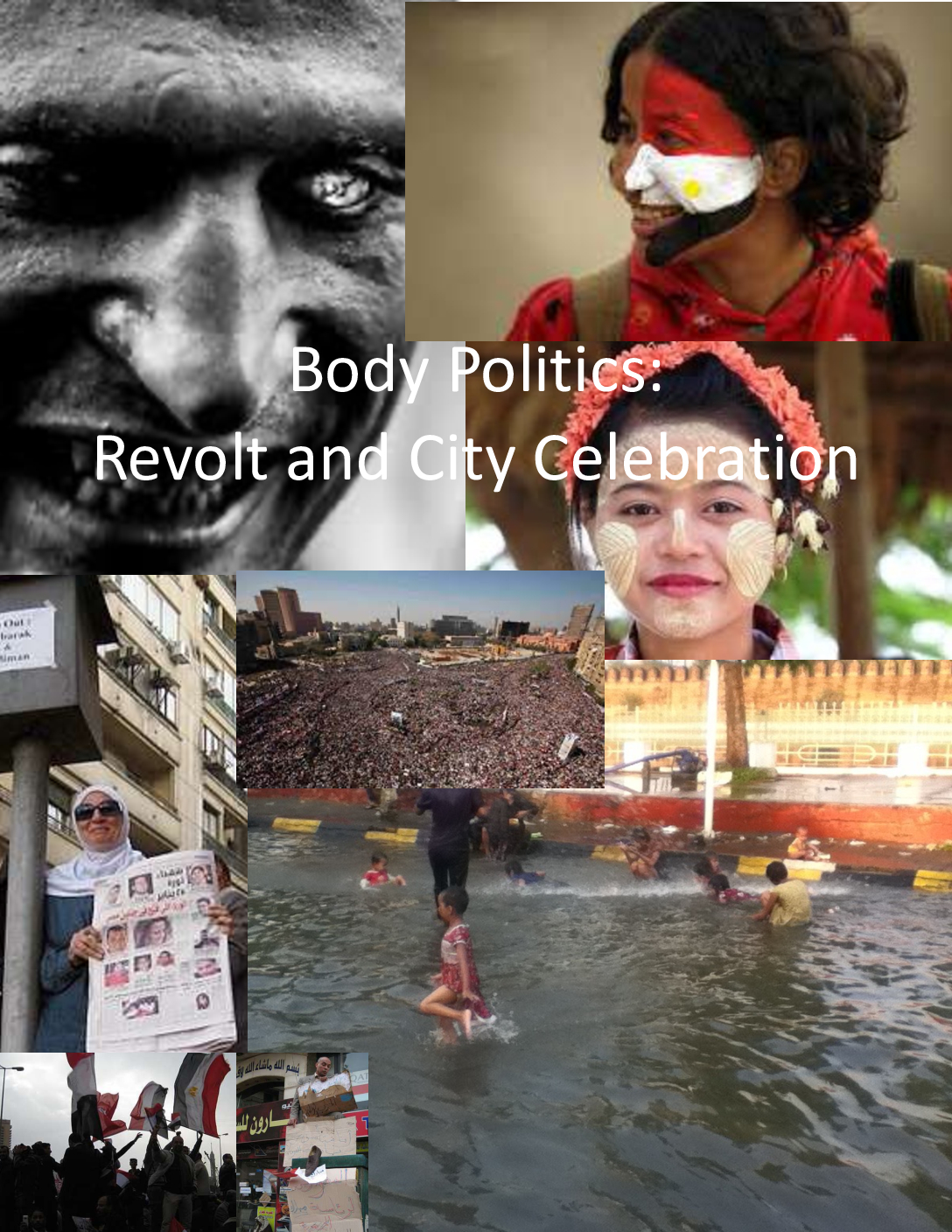
Body Politics: Revolt and City Celebration. (Brill)
Abstract: This chapter attends to somaesthetic expressions occurring irrespective of knowledge of the movement, using Mandalay’s Water Festival and Cairo’s Arab Spring as case studies. These celebrations and protests feature bodies creatively gravitating around urban structures and according to emotional, cultural concerns, all of this together defining city spaces for a time. Bodies also become venues for artistic refashioning, for example, through creative conversion of injuries into celebratory badges of dissent. Geared almost therapeutically towards life-improvement—albeit sometimes implicitly—these celebrations and protests also have meliorative aspects that mark the somaesthetic movement. Moreover, they have a shared, public character stressed by Shusterman, but arguably lost on many because of his interest in self-focused meditation and the popular appeal of such exercises among those interested in body practices.
Download PDF
Cover image
Digital Fabrication and Its Meaning for Film. (Springer)
Abstract: Bazin, Cavell and other prominent theorists have asserted that movies are essentially photographic, with more recent scholars such as Carroll and Gaut protesting. Today CGI stands as a further counter, in addition to past objections such as editing, animation and blue screen. Also central in debates is whether photography is transparent, that is, whether it allows us to see things in other times and places. I maintain photography is transparent, notwithstanding objections citing digital manipulation. However, taking a cue from Cavell—albeit one poorly outlined in his work—I argue this is not so much because of what photography physically is, but because of what “photography” has come to mean. I similarly argue digital technologies have not significantly altered what cinematic media “are” because they have not fundamentally modified what they mean; and that cinema retains a photographic legacy, even when it abandons photographic technologies to digitally manufacture virtual worlds.
Download PDF
Cover image
Pragmatism and the Valuative Mind. (Transactions of the Charles S. Peirce Society)
Abstract: In this article, I integrate pragmatic and contemporary literature to advance a valuative understanding of mind. That is, I argue valuations—taken to include emotions, interests and aesthetics—undergird cognition and perception. In making this case, I focus on James’s view that selective interests bring coherence to thought and experience. I further argue that interests are emotion-like. Though substantiated on conceptual, experiential and neurobiological grounds, this gets next to no attention, even among those who claim pragmatic influences and suggest emotion intertwines with cognition, such as Damasio and Schulkin. Extending this from cognition to perception, I go on to offer a valuative account of the latter that merges James and Dewey’s positions with Gestalt notions and findings from experimental research, along with Gibson’s ideas, which have pragmatic bases. By pushing pragmatism a little beyond what its original authors intended, placing it next to some of its intellectual offspring and highlighting underappreciated aspects, I hope to nudge thinking on mind in new directions, while simultaneously clarifying and rendering a fuller appreciation of classical pragmatism.
Download PDF
Cover image
Debating Public Policy: Ethics, Politics and Economics of Wildlife Management in Southern Africa (Trivent)
Co-authors: J. Salevurakis (second author)
Abstract: Based on field research in Africa, this essay explores three claims: first, that sport hunting places economic value on wildlife and habitats; second, that this motivates conservation practices in the interest of sustaining revenue sources; and, third, that this benefits human populations. If true, then sport hunting may sometimes be justifiable on utilitarian grounds. While not dismissing objections from the likes of Singer and Regan, we suggest their views – if converted into policy in desperately impoverished places – would destroy animals and the habitats on which they depend. There are empirical verifications of this, which we discuss.
Download PDF
Cover image
Pragmatic Evolutions of the Kantian a priori: From the Mental to the Bodily. (Nordic Pragmatism Network)
Abstract: In this article, I review textual evidence demonstrating that James and Dewey incorporated Kant’s ideas, even while criticizing him. I specifically argue that the pragmatic evolution of the Kantian a priori carried out by James and Dewey is a transition from the mental to the bodily. I further argue that the parallels between pragmatists and Kant, along with the transition from the mental to bodily, relate to scientific contexts in which all developed their outlooks. Though historically grounded, my ultimate goal is to show that pragmatism and by extension Kantianism mesh with and indeed contribute to cutting edge ideas in fields ranging from neuropathology to robotics and AI to cognitive science, whether in the form of Gibsonian theory or enactivism.
Download PDF
Cover image
Echoes of Past and Present (Open Court)
Co-authors: M. Dixon (second author)
Abstract: The album Echo was produced in a depressed, drug-riddled phase when Tom Petty’s first marriage was ending and his physical condition so degraded that he took to using a cane. Petty filmed no videos, avoided playing the album’s songs on the follow-up tour and reported little memory of its making. The thoughtfulness and self-reflection that traumatic circumstances spur distinguish the album. So too does the tendency to look backwards in times of crisis, whether in hopes of finding solidity in the past or just out of exhausted inability to cope with the present. While melancholically creative, the album might be regarded as an echoing of past musical fragments. The sprightly mix of acoustic and electric guitars, the backing vocal harmonies and the stories of loss in songs such as “Won’t Last Long” and “This One’s for Me” harken to Petty’s albums from the late 80s to mid-90s. “Accused of Love” similarly contains echoes of Petty’s more upbeat work, but with depressing lyrical undertones. The production qualities and lyrics of “Rhino Skin” recollect “Asshole,” a Beck cover from Petty’s previous album. “I Don’t Wanna Fight”—a Heartbreakers performance composed and sung by Mike Campbell—returns to the hard driving rock of Damn the Torpedoes. The lyrics, straight-laced drums and layered drones of electric guitars of “Free Girl Now” go back further to “American Girl,” which itself was influenced by psychedelic music. At the same time, all of this typifies Petty’s oeuvre. Throughout his career, he made music steeped in past rock traditions. He was also a seminal figure in Southern rock, with its emphatically nostalgic character. The crisis that Petty was experiencing echoes throughout the album in more specific ways, with many songs repeating the theme of being up or down, high or low. The theme of fighting or not wanting to has an especially strong echo, showing up in “Swingin’,” “Billy the Kid” and “I Don’t Wanna Fight.” These songs, in turn, exhibit nostalgia for past icons, with protagonists going down hard like Billy the Kid; or going down swinging like Sonny Liston; or again like Benny Goodman, Glenn Miller and Sammy Davis in a punny reference to the swing era. The retrospective feel of the album is one of looking to the past for the sake of self-preservation in the present, along lines discussed by Nietzsche. While symptomatic of illness, Nietzsche maintains this movement “springs from the protective instinct of a degenerating life which tries by all means to sustain itself and to fight for existence.” This seeming denial of growth can, as Nietzsche continues, be “among the greatest conserving and yes-creating forces of life.” Petty clearly associated Echo with personal grief, refusing to listen to it for years. As with many other examples of art, however, the album was also a way of surviving and growing beyond a present trauma, and one more specifically that compelled him to overcome an important part of his past, namely, his wife of 20-plus years. One can speculate that clinging to fragments of the past—musical and otherwise—was a way of coping with a difficult present and a fading past.
Download PDF
Cover image
William James, Darwinian Theory and Personal Evolution (Science and Education)
Download PDF
Cover image
The Soma in City Life: Cultural, Political and Bodily Aesthetics of Mandalay’s Water Festival. (Pragmatism Today)
Abstract: In this article, I contemplate the Water Festival in Mandalay, a city in Myanmar, focusing on the…
Download PDF
Cover image
Embodied Cognition and Perception: Dewey, Science and Skepticism. (Contemporary Pragmatism)
Abstract: This article examines how Modern theories of mind remain even in some materialistic and hence ontologically anti-dualistic views; and shows how Dewey, anticipating Merleau-Ponty and 4E cognitive scientists, repudiates these theories. Throughout I place Dewey’s thought in the context of scientific inquiry, both recent and historical and including the cognitive as well as traditional sciences; and I show how he incorporated sciences of his day into his thought, while also anticipating enactive cognitive science. While emphasizing Dewey’s continued relevance, my main goal is to show how his scientifically informed account of perception and cognition combats skepticism propagated by certain scientific visions, exacerbated by commonplace notions about mind, that jointly suggest that human beings lack genuine access to reality.
Download PDF
Cover image
Guest Editor’s Preface (Contemporary Pragmatism)
Download PDF
Cover image
Egypt and the Middle East: Democracy, Anti-Democracy and Pragmatic Faith. (Saint Louis Review of Public Law)
Abstract: This paper focuses on prospects for Western style “democracy” in the Middle East, pursuing three interrelated points. First, I argue that some “democratic” experiments—for example, Egypt under Mohammed Morsi—are not in keeping with etymological and historical meanings of democracy; second, that it may be totalitarian and also colonialistic and thus possibly contrary to democratic ideals to suppose Western style governments are the only morally acceptable ones; and third, that Middle Eastern countries face realities foreign to the West, and it is wrongheaded to presume that Western systems will inevitably work there if the aim is to improve human wellbeing. While generally skeptical of Western attempts to export democracy, partly because concepts of democracy in the West are already impoverished, and also because “freedom” and “oppression” are often shallowly conceived, I finish on a more hopeful note, focusing on Tunisia, and exploring conditions that led it to succeed were others floundered. I also consider a country for which many hold little hope—Libya—but discuss things that Libya has done right, and why optimism may be warranted.
Download PDF
Cover image
Difficulties in a Digital Age (Rhetoric Today)
Abstract: Struggling somewhat with writing in my youth, I am grateful for computers and word processors. As someone who now writes with relative ease and publishes a fair bit,
Download PDF
Cover image
Dewey on Sciences, Arts and Greek Philosophy or Implicit Narrative, Images and Dewey’s Aesthetics, (Peter Lang Press)
Download PDF
Cover image
Group Cognition in Pragmatism, Developmental Psychology and Aesthetics. (Pragmatism Today)
Abstract: From embodied pragmatic and phenomenological standpoints, the body is a system that falls into synchrony by coordinating around worldly contours. This engenders sensorimotor organization that constitutes perception, a view also defended by enactivists. I examine how similar coordinations occur in group contexts. I begin with a Deweyan account of perception. I then consider group action, locating Colwyn Trevarthen’s developmental research in a Deweyan framework, later linking it to Dewey’s aesthetics, which helps explain how perceptual and cognitive coherence emerge. I connect all this to the notion of “social affordances” with the aim of expanding on Dewey’s idea of experience as culture. I conclude that our psychological landscape begins as overwhelmingly social and remains so throughout life. By asserting this, I do not deny that physical movement is at play from day one, but suggest that it is intertwined with social life and social affordances all along, rather than the latter being built upon the former.
Download PDF
Cover image
Politics, Mythic Imagery and Visual Rhetoric in Film: The Apologetics of Pleasantville. (Opus et Educatio)
Abstract: Moving images, whether in film, television or videogames, dominate industrialized regions. They are accordingly primary modes through which many encounter the world, and in this sense become virtual realities. They can also be virtual in the sense of being artificial and simulated. The movie Pleasantville (1998) is a case in point. The movie does not even offer an imitation of historical events as much as an imitation of ready-made narratives circulating in mass media and culture. In this regard, it offers a variation of what Roland Barthes called mythic imagery, that is, a kind of sign language based in established discourses. Specifically, it employs common movie tropes representing fascism and racial segregation, along with symbolic representations of diversity, with the former associated with antagonists and the latter with protagonists. Because of this alignment, the movie, on the face of it, appears to have a progressive message. However, this appearance is misleading. Concretely speaking, most character developments are towards the mainstream and diversity diminishes at the end of the film, but with the visual rhetoric suggesting just the reverse. Consequently most audiences and indeed the writer-director fail to see that the movie is little more than an uncritical affirmation of mainstream American culture. Pleasantville accordingly stands as an illustrative example how iconographic representations of social and moral ideals that we unthinkingly reject or accept can be used to sell the reverse of what they celebrate.
Download PDF
Cover image
Screen Performers Playing Themselves, (British Journal of Aesthetics)
Abstract: Whereas recent commentators have suggested that consumer demand, typecasting and marketing lead performers to maintain continuities across films, I argue that cinema has historically made it difficult to subtract performers from roles, leading to relatively constant comportment, and that casting, marketing and audience preference are not only causes but also effects of this. I do so using thought experiments and empirical experiments, for example, by pondering why people say they see Jesus in paintings of him and rarely mention models, but stress that they see actors when encountering photographic stills of performers portraying him. Arguably, this relates to what photographs have historically come to mean, and these meanings would make it difficult for audiences to subtract and not see the actor. Based on such thinking, along with what filmmakers have said and done, and adding to classic accounts of Cavell, Santayana and others, I build the case that cinematic media invite performers to play themselves.
Download PDF
Cover image
Intuitive Cities: Pre-Reflective, Aesthetic and Political Aspects of Urban Design, (Journal of Aesthetics and Phenomenology)
Abstract: Evidence affirms that aesthetic engagement patterns our movements, often with us barely aware. This invites an examination of pre-reflective engagement within cities and also aesthetic experience as a form of the pre-reflective. The invitation is amplified because design has political implications. For instance, it can draw people in or exclude them by establishing implicitly recognized public-private boundaries. The Value Sensitive Design school, which holds that artifacts embody ethical and political values, stresses some of this. But while emphasizing that design embodies implicit values, research in this field lacks sustained attention to largely unconscious background biases or values, rooted in cultural attitudes and personal interests, that lead theorists and planners— often too narrowly—to promote design organized around specific values such as defensibility. In examining these points, I draw on J. J. Gibson, a central figure for some writing on aesthetics and cities, and whom pragmatists and phenomenologists in turn influenced. Taking a cue from pragmatists in particular, I argue that Gibson’s perceptual theory of affordances entails a theory of values, meaning our perception and therewith movements are inherently value-based. I advocate design that accounts for relatively constantly held values such as safety, while also handling the vast pluralism that exists and not crushing the aesthetic vibrancy of city life.
Download PDF
Cover image
Dewey, Enactivism and Greek Thought. (De Gruyer)
Abstract: In this chapter, I examine how Dewey circumnavigated debates between empiricists and a priorists by showing that active bodies can perform integrative operations traditionally attributed to “inner” mechanisms, and how he thereby realized developments at which the artificial intelligence, robotics and cognitive science communities only later arrived. Some of his ideas about experience being constituted through skills actively deployed in cultural settings were inspired by ancient Greek sources. Thus in some of his more radical moments, Dewey refined rather than invented the wheel, and I suggest that prominent embodiment figures have done the same, Dewey having anticipated them, particularly Noë and his version of enactivism. I urge that cognitive science may progress into relatively unexplored territory by traveling Dewey’s historically sensitive path.
Download PDF
Cover image
Dewey on Arts , Sciences and Greek Philosophy (Not mentioned)
Abstract: In this chapter, I ponder John Dewey’s efforts to understand science in terms of both the practical and fine arts; and how his writings on art and science suggest that Plato and Aristotle correctly identified conditions under which things become visible to cognition, even while not satisfactorily answering how these conditions can be met. Since Dewey understood aesthetic experience as a dramatic process, I also discuss how visual experience is imbued with narrative and therefore temporal structure, and the importance of this to understanding and learning.
Download PDF
Cover image
Pictures, Experiential Learning and Phenomenology. (Peter Lang Publishers)
Download PDF
Cover image
Asleep at the Press: Thoreau, Egyptian Revolt and Nuances of Democracy, (Arab Media and Society)
Abstract: Synopsis from “Connected in Cairo”: Matthew Crippen investigates the international media’s framing of Mohamed Morsi’s overthrow in the summer of 2013 and questions why much of the Western media – and Al Jazeera – adopted the uniform narrative that the ouster was a coup and a travesty of democracy. Morsi, after all, acted in arbitrary nondemocratic ways and fostered an atmosphere in which his supporters could trample the rights of … [minorities]. Drawing on Thoreau’s notions of civil disobedience, he argues that definitions of democracy implied by international media coverage were narrow, and their logic questionable.
Download PDF
Cover image
Body Phenomenology, Somaesthetics and Nietzschean Themes in Medieval Art, Pragmatism Today (Pragmatism Today)
Download PDF
Cover image
Performers Playing Themselves: Acting Invitations in Movies. (Not mentioned)
Abstract: [Early version of British Journal of Aesthetics paper presented on 09 May 2014 to the International Lisbon Conference on Philosophy and Film, Centro de Filosofia da Universidade de Lisboa, Lisbon, Portugal. (A revision entitled ‘Screen Performers Playing Themselves’, derived from a reworking of late 2015, was published as pages 163-177 of the British Journal of Aesthetics, Vol. 56, No. 2 in April, 2016. DOI:10.1093/aesthj/ayw044.)]
Download PDF
Cover image
William James and his Darwinian Defense of Freewill. (San Diego State University Press)
Abstract: If asked about the Darwinian influence on William James, some might mention his pragmatic position that ideas are “mental modes of adaptation,” and that our stock of ideas evolves to meet our changing needs. However, while this is not obviously wrong, it fails to capture what James deems most important about Darwinian theory: the notion that there are independent cycles of causation in nature. Versions of this idea undergird everything from his campaign against empiricist psychologies to his theories of mind and knowledge to his pluralistic worldview; and all of this together undergirds his attempts to challenge determinism and defend freewill. I begin this paper by arguing that James uses Darwinian thinking to bridge empiricism and rationalism, and that this merger undermines environmental determinism. I then discuss how Darwinism informs his concept of pluralism; how his concept challenges visions of a causally welded “block universe”; and how it also casts doubt on the project of reducing all reality to physical reality, and therewith the wisdom of dismissing consciousness as an inert by-product of physiology. I conclude by considering how Darwinism helps him justify the pragmatic grounds upon which he defends freewill.
Download PDF
Cover image
William James on Belief: Turning Darwinism Against Empiricistic Skepticism. (Transactions of the Charles S. Peirce Society)
Abstract: Few address the extent to which William James regards the neo-Lamarckian account of “direct adaptation” as a biological extension of British empiricism. Consequently few recognize the instrumental role that the Darwinian idea of “indirect adaptation” plays in his lifelong efforts to undermine the empiricist view that sense experience molds the mind. This article examines how James uses Darwinian thinking, first, to argue that mental content can arise independently of sense experience; and, second, to show that empiricists advance a hopelessly skeptical position when they insist that beliefs are legitimate only insofar as they directly correspond to the observable world. Using his attacks on materialism and his defense of spiritualism as examples, I particularly consider how Darwinian thinking enables him to keep his empiricist commitments while simultaneously developing a pragmatic alternative to empiricistic skepticism. I conclude by comparing his theory of beliefs to the remarkably similar theory of “memes” that Richard Dawkins uses to attack spiritualistic belief—an attack that James anticipates and counters with his pragmatic alternative.
Download PDF
Cover image
The Totalitarianism of Therapeutic Philosophy: Reading Wittgenstein Through Critical Theory. (Essays in Philosophy)
Abstract: Abstract [Excerpted From Editor’s Introduction] Matthew Crippen takes this up in a Marcusian critique of Wittgenstein that attends, among other things, to the place of silence in that discourse. Referring to Horkheimer’s citation of the Latin aphorism that silence is consent, Crippen is critical of Wittgenstein’s admonition that we must pass over in silence those matters of which we cannot speak. This raises fascinating questions for critical theory that Crippen explores particularly with reference to Marcuse’s concept of one-dimensionality. To the extent that Wittgenstein’s philosophy is “therapeutic,” it may effectively contain dissent by “helping” dissenters become “well-adjusted.” Marcuse, of course, was particularly concerned with the power of Total States— and particularly those engendered by advanced industrial capitalism—to contain dissent precisely by using therapeutic techniques to maintain adjustment. Bringing Marcuse and Wittgenstein together here has particularly explosive possibilities. In the context of a Total State, transformation depends on the possibility of calling the State into question from the inside (since “total” States systematically eliminate “outsides”). This is the point at which Wittgenstein’s silence becomes most intriguing. What is it, we must ask, that we cannot say? Silence may be (as Martin Luther King, Jr. said) more than consent: there comes a time when silence is betrayal. But this is one of many places where it pays to look at what is done as much as what is said. What game, we might ask, is Wittgenstein playing? And, more to the point, what is the field of play that joins Wittgenstein and Marcuse? John Cage famously said “I have nothing to say and I am saying it and that is poetry as I need it…” Crippen begins a process (via Wittgenstein) of putting poetry into play that has important implications for the public work of philosophers.

Download PDF

Talks
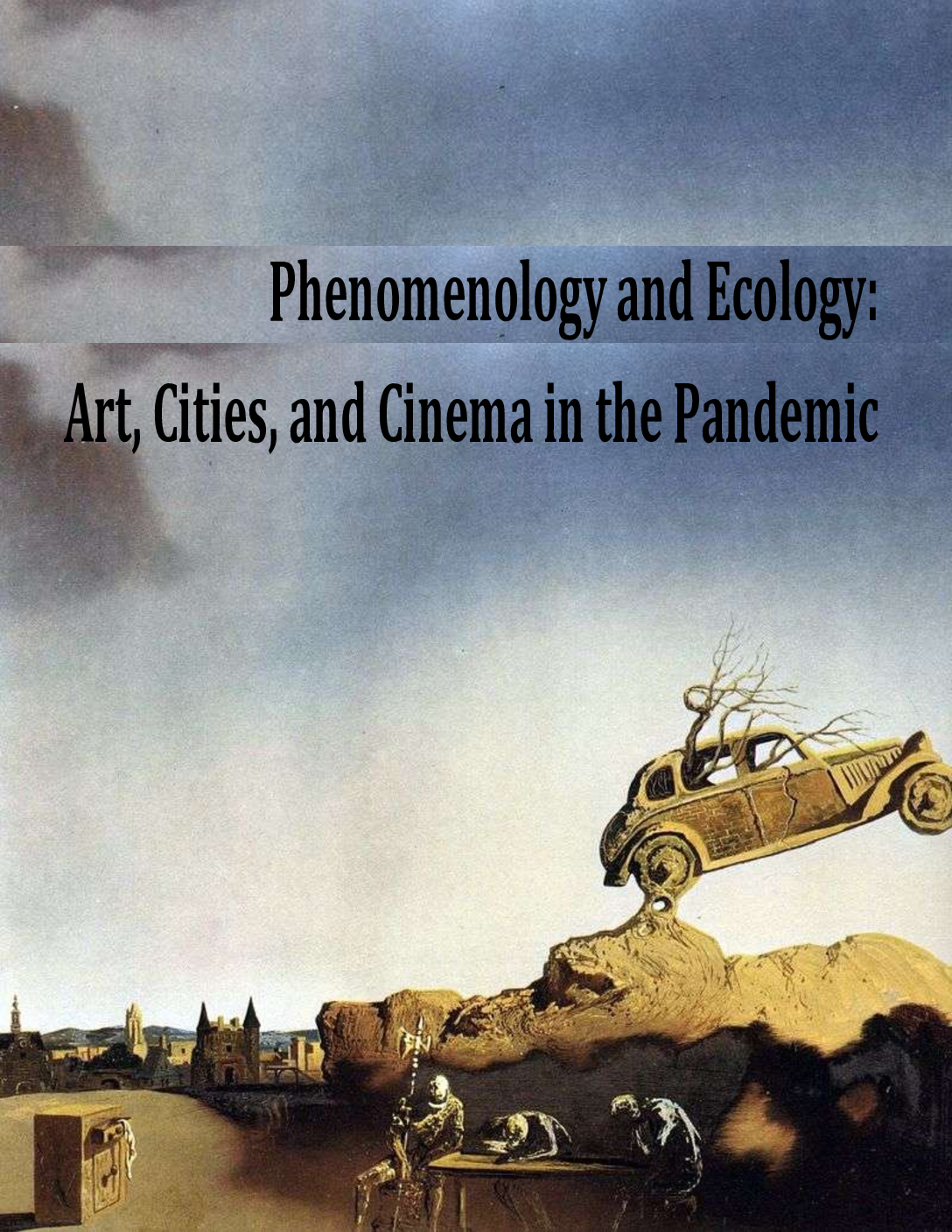
Coming soon.

Other Works

Coming soon.